
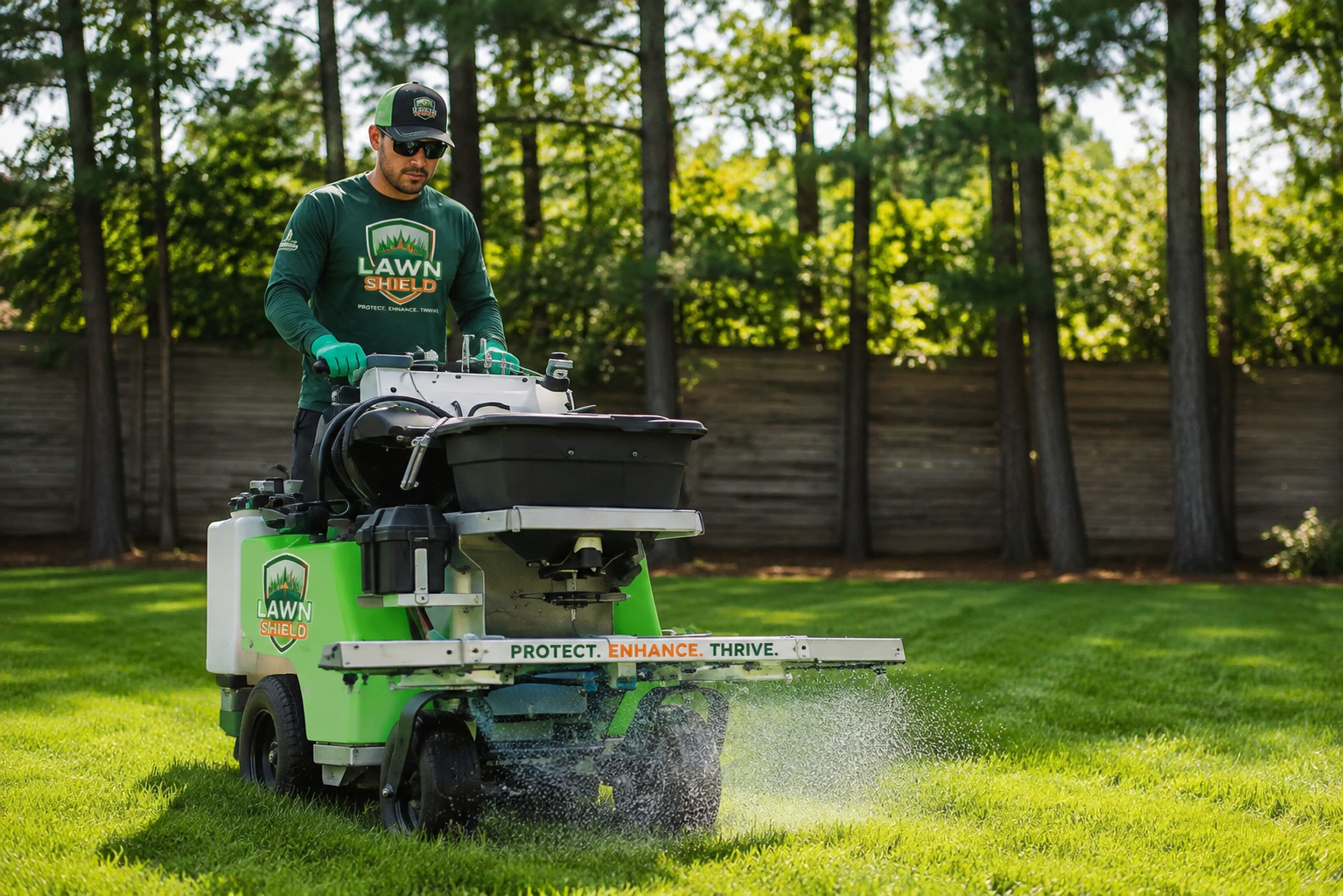
Core Aeration & Overseeding
Aeration & Overseeding in Lancaster, PA
Relieve compacted soil and thicken thin turf with core aeration and overseeding, timed for Lancaster County's cool-season lawns.
What Is Core Aeration, and Why Do Lancaster Lawns Need It?
Core aeration pulls small plugs of soil out of the lawn, opening the ground beneath the grass so air, water and nutrients can reach the root zone more easily.
Much of Lancaster County sits on heavy clay soil, and years of mowing, foot traffic and equipment can compact that soil over time. Compacted soil resists water infiltration, restricts root growth and can leave a lawn looking thin even when it's being fertilized on a regular schedule. Aeration addresses the soil itself rather than what's applied on top of it.
A layer of thatch — dead grass, roots and organic debris sitting at the soil surface — can compound the problem by blocking water and seed from ever reaching the ground. Aeration helps break through that layer and gives the lawn a better starting point for the season ahead.

How It Works
How Core Aeration & Overseeding Works
- 01
Assess the Soil
We check for compaction, thatch buildup and bare or thinning areas before deciding whether aeration and overseeding make sense for the property.
- 02
Core Aeration
A core aerator pulls small plugs of soil from the lawn, opening channels that relieve compaction and let air, water and nutrients reach the root zone.
- 03
Overseed
Grass seed is spread across the aerated lawn so it can settle into the holes and surrounding soil, giving new seedlings direct contact with soil rather than sitting on top of thatch.
- 04
Recovery Care
Watering guidance and mowing adjustments after service give new seed the conditions it needs to germinate and establish alongside the existing turf.
Two Different Jobs
Aeration vs. Overseeding: What Each One Actually Does
The two services are often performed together, but they solve different problems. Aeration works on the soil; overseeding adds new grass.
Core Aeration
- Physically relieves soil compaction
- Improves air, water and nutrient movement to roots
- Helps reduce thatch buildup over time
- Does not add new grass plants to the lawn
Overseeding
- Introduces new grass seed into existing turf
- Thickens thin or bare areas
- Works best when seed reaches soil, not thatch
- Does not address compacted soil on its own
What You'll See
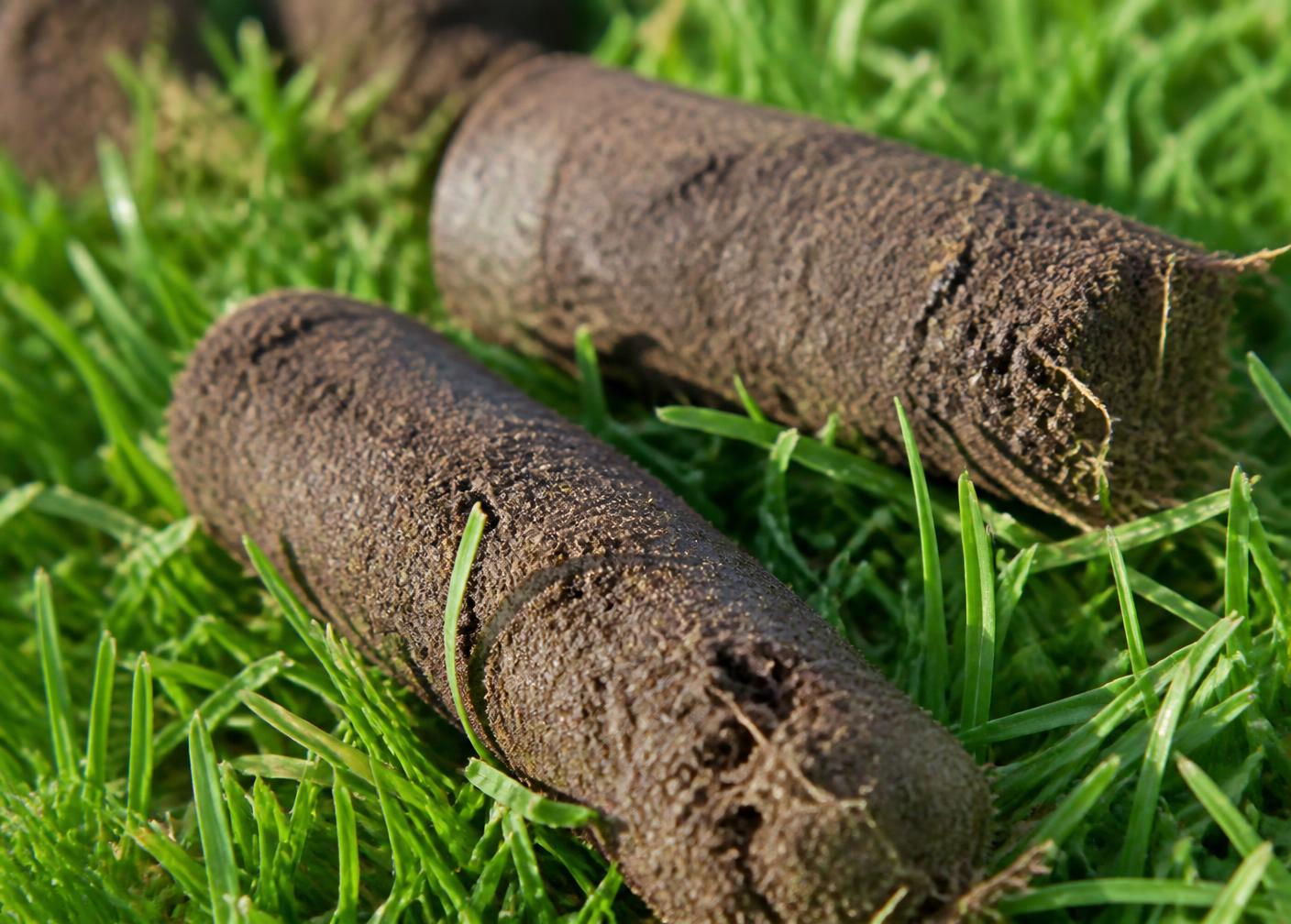
Those Little Soil Plugs Are Doing Their Job
After aeration, you'll see small plugs of soil scattered across the lawn. That's expected, not a mess to clean up. Left on the surface, they break down naturally over the following weeks and return organic matter to the soil.
The holes left behind are where the real benefit happens — air, water and any overseeded grass seed can settle into that opened soil instead of staying trapped above a compacted or thatch-covered surface.
Request a Free Lawn EvaluationService Day
What to Expect During and After Service
Before your visit, make sure sprinkler heads, shallow utility lines, pet waste and any obstacles are visible or flagged. Mowing the lawn a bit shorter than usual beforehand can help seed reach the soil during overseeding.
Afterward, keep the soil surface consistently moist if seed was applied, generally with light, frequent watering rather than infrequent soaking, until seedlings are established. Hold off mowing until new grass reaches a normal mowing height, and raise the mower deck for the first few cuts.
Foot traffic, pets and heavy equipment should be kept off the lawn as much as possible while seed germinates, which typically takes a couple of weeks depending on weather.
Aeration pairs naturally with an ongoing fertilization program, since opened soil allows the lawn to make better use of nutrients applied in following visits.
Seasonal Timing
The Best Time to Aerate and Overseed in Pennsylvania
Cool-season grasses common in Lancaster County establish best when soil is warm but air temperatures are cooling — conditions that generally line up with early fall.
Late Summer
Soil temperatures begin to cool while daytime warmth remains, setting up favorable conditions for seed germination.
Early Fall
This is generally considered the primary window for core aeration and overseeding on cool-season lawns in Pennsylvania.
Fall
Cooler air, warmer soil and typically more consistent rainfall help new seedlings establish before winter dormancy.
Spring
A secondary window exists, though spring seeding often competes with weed pressure and summer heat arriving before grass fully matures.
A note on timing conflicts: pre-emergent crabgrass control works by stopping seeds from germinating in the soil — including grass seed. That means spring pre-emergent applications and spring overseeding generally shouldn't happen in the same area at the same time. It's one more reason fall is typically the better window for introducing new seed.
Program Inclusion
Aeration Is Included in the Lawn Shield Elite Program
Core aeration is built into our Elite lawn-care program alongside fertilization, weed control, disease control and a professional soil test, so soil health is managed as part of the full season rather than treated as a separate purchase.
Essential
5 Visits
Core fertilization, pre-emergent crabgrass control, weed control and grub prevention through the season.
- Best Value
Pro
6 Visits
Everything in Essential plus surface insect control, one free lawn treatment, a root stimulant bonus and unlimited service calls.
Elite
10 Visits
Our most complete program, adding disease control, core aeration and a professional soil test.
Programs start at $69 per application, based on a lawn up to 5,000 sq. ft.
Lancaster County Service
Aeration & Overseeding Throughout Lancaster County
Compaction and thatch build up differently depending on soil type, lawn age and how a property is used, and that varies across Lancaster County. Lawn Shield accounts for those differences from established city lots to newer lawns in growing townships.
Choose your community below to learn more about aeration and overseeding near you, or call and we'll confirm service for your address.
- Lawn care in Lancaster
- Lawn care in Lititz
- Lawn care in Manheim Township
- Lawn care in East Petersburg
- Lawn care in Mount Joy
- Lawn care in Ephrata
- Landisville
- Millersville
- Elizabethtown
- Strasburg
- New Holland
Aeration Questions
Aeration & Overseeding FAQs
Straightforward answers about timing, process and pricing for aeration and overseeding in Lancaster County.
Get Exact PricingHow often should I aerate my lawn?
Most Lancaster County lawns benefit from aeration once a year, though heavily compacted soil, high-traffic yards or lawns on clay-heavy ground may benefit from more frequent treatment. A thinner, sandier lawn with light traffic may need it less often.
What is the best month to aerate a lawn in PA?
Early fall is generally considered the best window for cool-season lawns in Pennsylvania, since cooler air and warmer soil support both aeration recovery and seed germination. A secondary spring window exists but comes with more competition from weeds and warmer weather arriving sooner.
What is the difference between aeration and dethatching?
Aeration removes small plugs of soil to relieve compaction and improve air and water movement to the roots. Dethatching physically removes the layer of dead organic material sitting on top of the soil. They address different problems and are sometimes, but not always, done together.
Can I overseed and apply crabgrass pre-emergent at the same time?
No, and being upfront about this matters. Pre-emergent crabgrass control works by preventing seeds from germinating in the soil, which means it also prevents grass seed from germinating. That is one reason fall overseeding, done outside the spring pre-emergent window, is the more common approach for introducing new seed. If your lawn needs both crabgrass prevention and overseeding, we'll talk through the timing so one doesn't undo the other.
How much should I water new grass seed after overseeding?
New seed generally needs the top layer of soil to stay consistently moist until germination, which often means light, frequent watering rather than a single deep soak. We'll go over specific watering and mowing guidance for your lawn after service.
Does aeration help if I already fertilize my lawn?
Yes. Fertilization feeds the lawn, but compacted soil can limit how well roots take up water and nutrients in the first place. Aeration is often paired with a fertilization program so the turf can make better use of the nutrients it's already receiving.
How much does aeration and overseeding cost in Lancaster, PA?
Lawn Shield programs currently start at $69 per application based on a lawn up to 5,000 sq. ft.. Aeration is included in our Elite program, and can also be discussed as an add-on depending on your lawn's needs.
Open soil is only useful if the lawn can use it
Aeration relieves compaction; a fertilization program keeps feeding the roots that can now breathe.
Free Lawn Quote
Request Your Free Lancaster County Lawn Quote
Tell us about your lawn and we'll follow up with a program recommendation and pricing for your property. Programs start at $69 per application, based on a lawn up to 5,000 sq. ft.
- Free, no-obligation lawn quote
- Local Lancaster County lawn care team
- Program recommendation based on your lawn
Free Lawn Evaluation
Give Compacted, Thin Turf a Fresh Start
Get a free Lawn Shield quote and find out whether aeration and overseeding fit your Lancaster County lawn.
Core Aeration & Overseeding • Lancaster County, PA