
Pre-Emergent Crabgrass Prevention
Crabgrass Control in Lancaster, PA
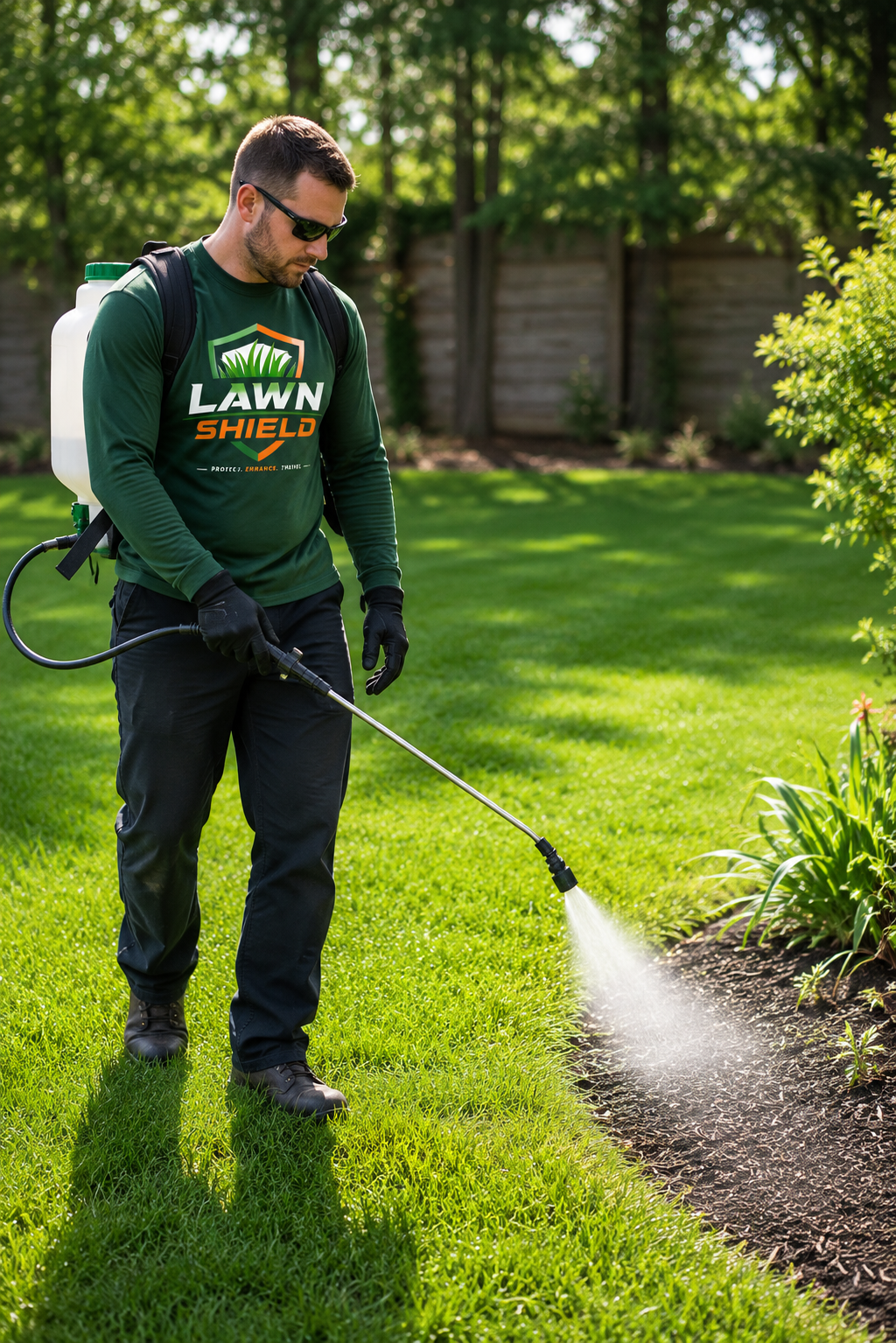
Crabgrass is a warm-season grassy weed that germinates once soil temperatures warm in spring — which means the most effective window for stopping it comes and goes before most homeowners notice a problem. Lawn Shield times pre-emergent applications to soil conditions across Lancaster County rather than a fixed date.
Pre-emergent crabgrass control is included in every Lawn Shield program.
55°F
Approximate soil temperature at which crabgrass seed begins germinating.
Included In
Every Lawn Shield program, starting at $69 per application.
What Is Crabgrass, and Why Does Timing Matter So Much?
Crabgrass is an annual, warm-season grassy weed — different from the broadleaf weeds (dandelion, clover, plantain) covered on our lawn weed control page. It germinates from seed each spring once soil warms, grows aggressively through summer, and is killed by the season's first hard frost — but not before dropping new seed for next year.
Because pre-emergent treatment works on the soil ahead of germination, it has to be applied before crabgrass seed sprouts — not after it's already visible in the lawn. That's why crabgrass control is planned around soil temperature rather than added reactively later in the season.
Grassy Weed, Not Broadleaf
Weed Identification
How to Identify Crabgrass in Your Lawn
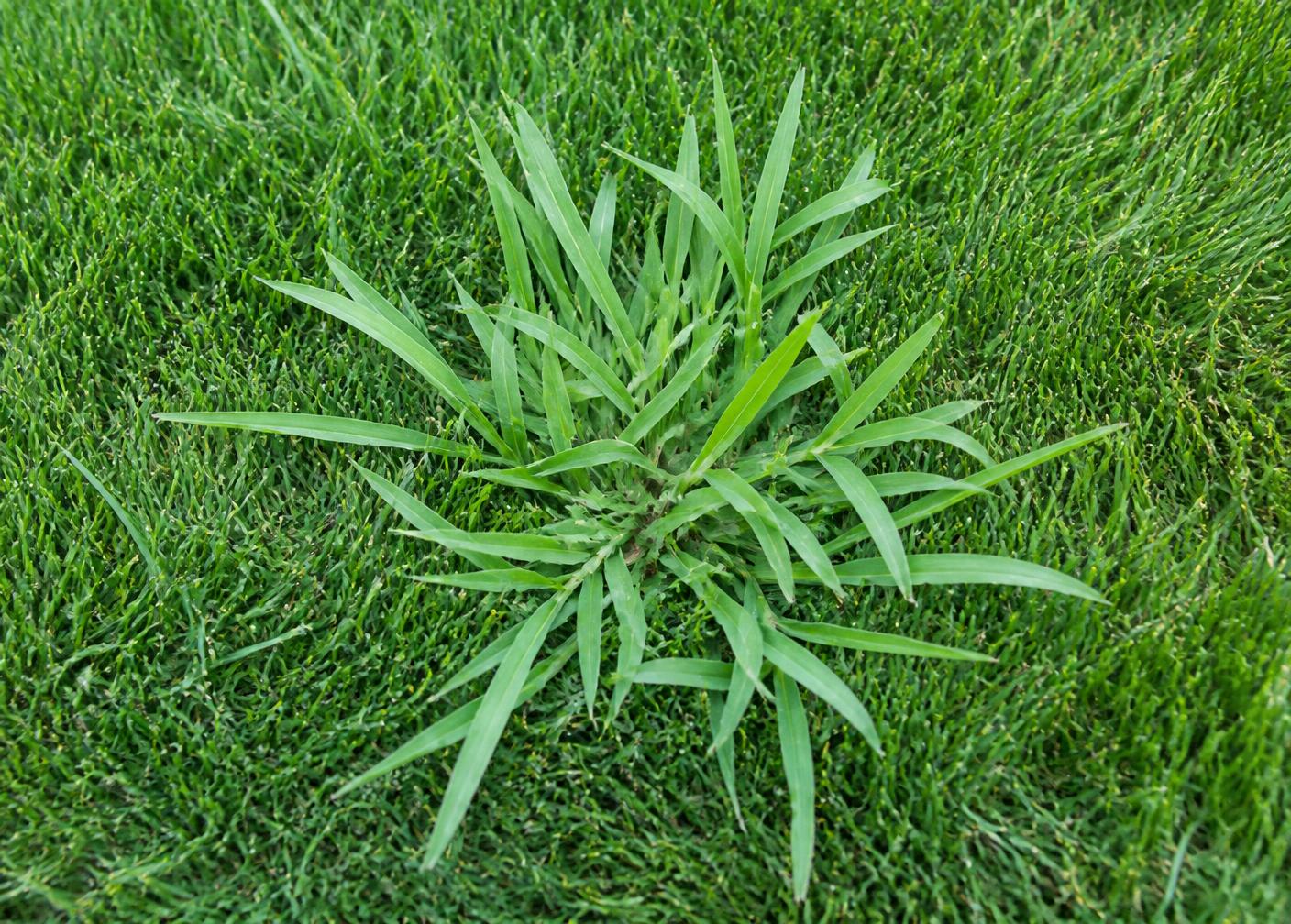
Crabgrass is often mistaken for ordinary turf until it's fully established. A few traits set it apart.
- Coarse, wide blades
- Crabgrass blades are noticeably wider and coarser than most cool-season turfgrass, giving patches a rougher texture.
- Low, spreading growth habit
- Rather than growing upright, crabgrass spreads outward from a central point, forming a star-shaped clump close to the ground.
- Pale green to yellow-green color
- Established clumps often stand out against surrounding turf with a lighter, yellow-green cast, especially by late summer.
- Concentrated along edges and thin turf
- Driveway edges, sidewalk cracks and thin or bare patches are where crabgrass most commonly establishes first.
Germination Trigger
Crabgrass Germinates by Soil Temperature, Not the Calendar
Crabgrass seed begins sprouting once soil temperature holds near 55°F for several consecutive days — a threshold that can arrive earlier or later each year depending on Lancaster County's spring weather. Pre-emergent needs to be down before that window opens.
~40–50°F
Cold soil. Turf is waking up; crabgrass is dormant. Ideal window to have pre-emergent applied.
~55°F, sustained
Germination threshold. Crabgrass seed begins sprouting once this temperature holds for several days running.
65°F+
Active growth. Emerged crabgrass is now visible and pre-emergent is no longer effective on it.
Because that window shifts from year to year, Lawn Shield tracks seasonal soil conditions across Lancaster County rather than treating every property on the same fixed date.
Two Different Jobs
Pre-Emergent vs. Post-Emergent Crabgrass Control
These two approaches work at different points in crabgrass's life cycle, and one is considerably more reliable than the other.
Pre-Emergent
A barrier at the soil surface, applied before germination.
- • Targets crabgrass seed as it attempts to sprout
- • Must be applied before the ~55°F germination window opens
- • Does nothing to plants that have already emerged
- • The primary, most reliable line of defense
Post-Emergent
Targets crabgrass that is already visible and growing.
- • Works best on young, actively growing crabgrass
- • Becomes markedly less effective on mature, seed-bearing plants
- • May require multiple visits with mixed results late in the season
- • A backup option, not a substitute for prevention
In practice, this is why crabgrass prevention is built into Lawn Shield programs from the start of the season rather than offered only as an after-the-fact fix.
Season After Season
Why Crabgrass Keeps Coming Back
It Produces Seed Before Dying
Crabgrass is a true annual — the plant itself dies with the first hard frost, but not before dropping large amounts of seed into the soil that winter over and germinate the following year.
Seed Can Remain Viable for Years
Crabgrass seed doesn't need to germinate the same year it's produced. A single untreated season can leave seed in the soil that surfaces well beyond the following spring.
Thin Turf Leaves Room to Establish
Dense, healthy grass shades the soil surface and competes for space, light and water. Where turf is thin, compacted or mowed too short, more sunlight reaches the soil and more crabgrass seedlings survive.
Neighboring Properties Contribute Seed
Crabgrass seed can move between properties via mowing equipment, wind and runoff, so even a well-managed lawn faces ongoing pressure from surrounding areas.
Cultural Practices That Help
Mowing at a taller height and watering deeply but less frequently both encourage denser turf and deeper roots, which leaves less open soil and light available for crabgrass seedlings to establish. These practices support — but don't replace — properly timed pre-emergent treatment and ongoing lawn fertilization.
An Honest Trade-Off
Pre-Emergent and Overseeding Don't Mix on the Same Visit
Pre-emergent herbicide can't tell the difference between crabgrass seed and the grass seed used for aeration and overseeding. Applying both around the same time can prevent new lawn seed from establishing, which defeats the purpose of overseeding. If a lawn needs both crabgrass prevention and overseeding in the same year, timing has to be sequenced carefully rather than combined.
Related Prevention
Crabgrass Isn't the Only Spring Threat
Spring is also when grub activity from the previous fall can leave lasting turf damage that mimics thinning caused by weeds. Learn more about grub control in Lancaster, PA to understand how the two issues differ and why both are addressed within a full lawn-care program.

Protect. Enhance. Thrive.
Crabgrass Prevention Built Into Every Program
Pre-emergent crabgrass control isn't an add-on at Lawn Shield — it's part of the base treatment schedule for every lawn-care program, timed to Lancaster County's soil conditions each spring.
See Program OptionsLawn Shield Programs
Pre-Emergent Crabgrass Control Is Included in Every Program
From Essential through Elite, crabgrass prevention is scheduled as part of the base treatment plan, with additional seasonal services layered on top.
Essential
5 Visits
Core fertilization, pre-emergent crabgrass control, weed control and grub prevention through the season.
- Best Value
Pro
6 Visits
Everything in Essential plus surface insect control, one free lawn treatment, a root stimulant bonus and unlimited service calls.
Elite
10 Visits
Our most complete program, adding disease control, core aeration and a professional soil test.
Programs start at $69 per application, based on a lawn up to 5,000 sq. ft.
Lancaster County Service
Crabgrass Control Throughout Lancaster County
Soil warms at slightly different rates across Lancaster County depending on sun exposure, slope and surrounding pavement, which shifts the ideal pre-emergent window property to property.
Lawn Shield tracks local soil conditions and schedules crabgrass prevention accordingly for residential lawns throughout the county.
- Lawn care in Lancaster
- Lawn care in Lititz
- Lawn care in Manheim Township
- Lawn care in East Petersburg
- Lawn care in Mount Joy
- Lawn care in Ephrata
- Landisville
- Millersville
- Elizabethtown
- Strasburg
- New Holland
Crabgrass Questions
Lancaster PA Crabgrass Control FAQs
Honest answers about crabgrass timing, prevention and what pre-emergent treatment can and can't do.
Get Exact PricingWhen should crabgrass pre-emergent be applied in Lancaster, PA?
Pre-emergent crabgrass control is timed to soil temperature rather than a calendar date. Applications are generally made before soil temperatures sustain roughly 55°F for several consecutive days, which is when crabgrass seed begins germinating. In Lancaster County that window typically falls in early-to-mid spring but shifts with the weather each year.
Does pre-emergent kill existing crabgrass?
No. Pre-emergent herbicide forms a barrier near the soil surface that targets germinating seedlings — it is not designed to kill crabgrass plants that have already emerged and are growing. If crabgrass is already visible, a different, post-emergent approach is needed, and results on mature plants tend to be less consistent.
Can you seed my lawn after a pre-emergent application?
Not right away. Pre-emergent herbicide doesn't distinguish between crabgrass seed and grass seed, so it can also prevent newly seeded turf from establishing. This is why pre-emergent crabgrass control and aeration/overseeding are typically scheduled apart from one another rather than on the same visit — we'll talk through timing based on your lawn's specific needs.
Does crabgrass die in the fall, and will it come back?
Yes to both. Crabgrass is killed off by the season's first hard frost, but the plant has usually already produced seed by that point. That seed remains in the soil and is what germinates the following spring, which is why crabgrass tends to reappear year after year without preventative treatment.
Will one treatment be enough to control crabgrass?
A single, well-timed pre-emergent application can meaningfully reduce germination for that season, but crabgrass control works best as a repeated, season-over-season strategy — since seed already in the soil, thin turf and pressure from neighboring properties all continue year to year.
How much does crabgrass control cost in Lancaster, PA?
Pre-emergent crabgrass prevention is included in Lawn Shield's lawn-care programs rather than billed as a separate service. Programs currently start at $69 per application based on a lawn up to 5,000 sq. ft.. Exact pricing depends on lawn size and the program selected.
Why does crabgrass show up along my driveway and sidewalk first?
Pavement absorbs and radiates heat, which warms the adjacent soil faster than open lawn area. Since crabgrass germination is temperature-driven, soil next to hardscaping often reaches the germination threshold earlier — and turf along those edges is also frequently thinner, giving seedlings less competition.
Free Lawn Quote
Request Your Free Lancaster County Lawn Quote
Tell us about your lawn and we'll follow up with a program recommendation and pricing for your property. Programs start at $69 per application, based on a lawn up to 5,000 sq. ft.
- Free, no-obligation lawn quote
- Local Lancaster County lawn care team
- Program recommendation based on your lawn
Free Lawn Evaluation
Get Ahead of Crabgrass This Season
Get a free quote for pre-emergent crabgrass control and full lawn-care programs from Lawn Shield.
Serving Lancaster County, Pennsylvania