
Seasonal Guide
Spring Lawn Care in Pennsylvania: What to Do First
Quick Answer
Spring lawn care in Pennsylvania usually starts with assessment and cleanup, then moves into mowing, weed prevention and fertilization as turf begins active growth. The goal is supporting a healthy start rather than forcing early growth.
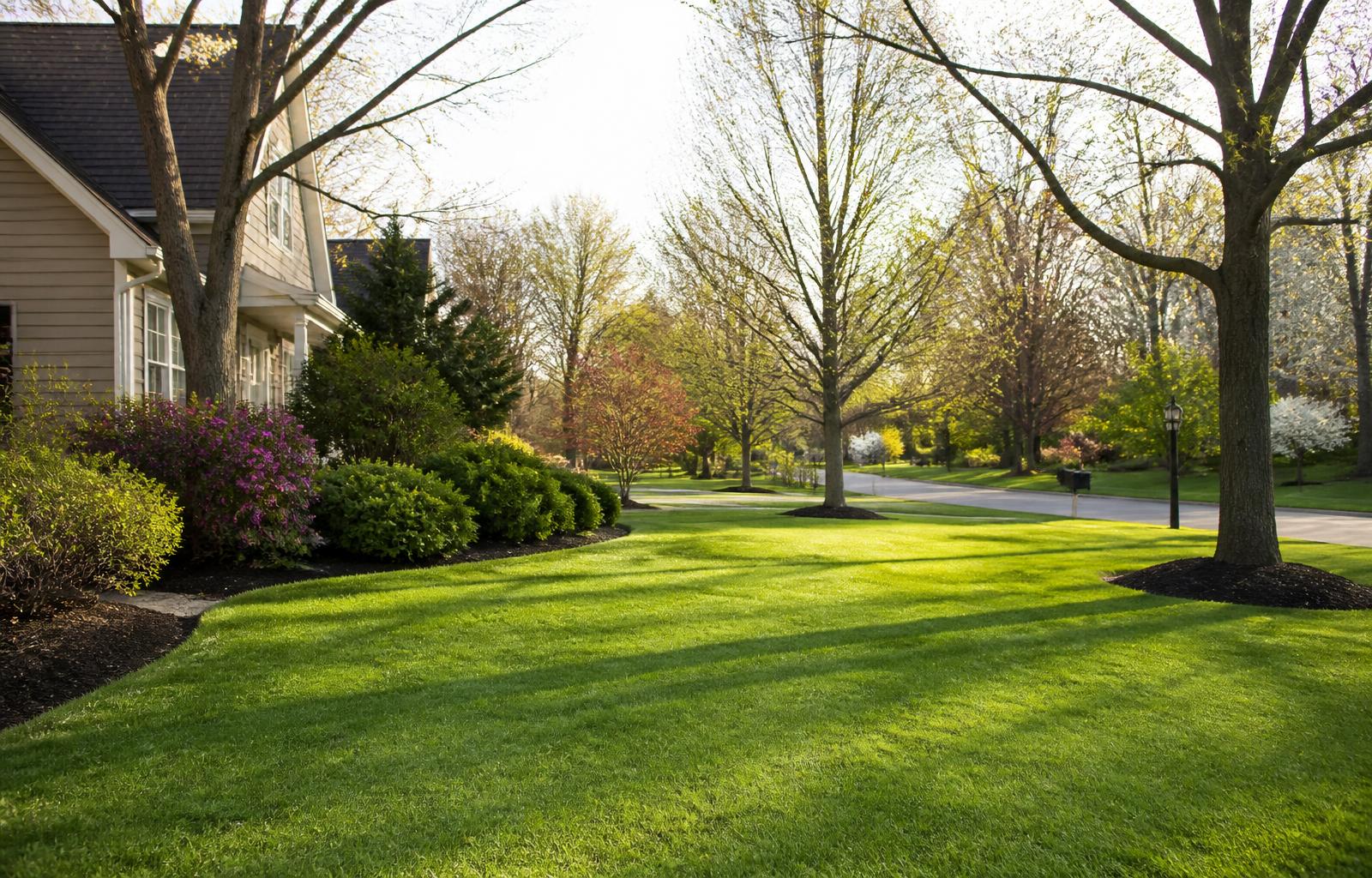
Step One
Look Before You Treat
The most useful spring task costs nothing: walk the lawn and note what winter left behind. Matted areas, bare patches, salt-damaged edges along drives and walks, compacted paths, and early weed activity in warm corners all point toward what the season should prioritize.
A lawn that thinned last summer needs a different spring than one that simply looks tired. Treating both the same way is how homeowners end up spending money without changing the outcome.
Seasonal Sequence
How a Pennsylvania Spring Typically Unfolds
A sequence rather than a schedule — each stage begins when the lawn is ready, not on a fixed date.
Early Spring
01Before consistent growth
- Assess winter damage and note problem areas
- Light cleanup of matted debris and leaf cover
- Sharpen mower blades and service equipment
- Plan crabgrass prevention timing
Avoid aggressive raking of turf that has not started growing.
Mid Spring
02Growth begins
- First mow at an appropriate height with a sharp blade
- Pre-emergent crabgrass control as soil warms
- Fertilization once turf is actively growing
- Address broadleaf weeds while they grow actively
Late Spring
03Peak growth
- Mow frequently enough to follow the one-third rule
- Continue weed management as needed
- Watch for surface insect activity
- Plan grub prevention where history warrants it
Prepare the lawn for summer rather than pushing more growth.
Every item here is a potential focus, not a required treatment. Lawns differ, and Lancaster County weather can shift these windows from one year to the next.
Mowing
The First Mow Sets the Season
The temptation is to cut short early "to clean things up." Scalping a lawn that is just waking up removes leaf area the plant needs to rebuild, exposes soil to light that favors weed germination, and stresses roots that are still shallow.
A better approach is starting at a reasonable height, mowing often enough that you never remove more than about a third of the blade, and keeping the blade sharp. Torn leaf tips turn whitish-brown and make a healthy lawn look sick.
Weeds
Spring Weed Management
Spring involves two distinct weed jobs. Preventing summer annuals such as crabgrass depends on applying a barrier before germination. Managing broadleaf perennials such as dandelions and clover depends on treating plants while they are actively growing.
Both matter less on a dense lawn. Weeds establish where turf leaves room, which is why thickening a thin lawn does more long-term good than any single herbicide application.
What to Avoid
Common Spring Lawn Care Mistakes
- Working saturated soil. Traffic on soft ground compacts it for the rest of the year.
- Scalping the first mow. Short early cutting invites weeds and stresses turf.
- Dethatching by default. Aggressive dethatching is warranted less often than it is performed; compaction is the more common culprit.
- Seeding into pre-emergent. The two generally conflict.
- Fertilizing dormant turf. The lawn can only use nutrients when it is growing.
Spring Questions
Spring Lawn Care FAQs
Raking, mowing, seeding and the mistakes worth skipping.
Get My Free Lawn QuoteShould you rake your lawn in spring?
Light raking to remove matted debris and leaf cover helps air and light reach the turf. Aggressive raking of soft, waking turf can tear crowns and do more harm than the debris was doing.
When should you start mowing in spring?
Mowing resumes once the lawn is actively growing enough that cutting removes only a small portion of the leaf. Starting with a sharp blade matters, since the first cuts set the tone for the season.
Should you dethatch in spring?
Dethatching is only warranted when thatch is genuinely excessive, and it is an aggressive practice. Many lawns diagnosed with a thatch problem actually have a compaction problem, which core aeration addresses more appropriately.
Is spring a good time to seed?
It can be done, particularly after winter damage, but spring seedlings face weed competition and a short runway before summer heat. Fall seeding is often more reliable for cool-season lawns.
Why does my lawn look worse in spring than last fall?
Winter can leave matted turf, snow-mold-like patches, salt damage along pavement and traffic damage from frozen ground. Much of it recovers as growth resumes, though some areas need repair.
Should you water a lawn in spring?
Spring rainfall often covers a Pennsylvania lawn's needs. Supplemental watering matters more during dry spells and for newly seeded areas.
What is the most common spring lawn care mistake?
Doing too much too early — heavy raking, scalping the first mow, or fertilizing a lawn that has not started growing. Spring rewards patience more than intensity.
Sources & References
- Penn State Extension — Lawn and Turfgrass resources for Pennsylvania homeowners (extension.psu.edu).
- Penn State Center for Turfgrass Science — general cool-season turfgrass management guidance.
Penn State Extension does not endorse Lawn Shield. References are provided because publicly available university turfgrass guidance informed the general practices described on this page.
Published by Lawn Shield
This guide is intended to provide general lawn-care education for Pennsylvania homeowners. Treatment timing and recommendations may vary based on weather, turf conditions and the property being treated.
Free Lawn Quote
Request Your Free Lancaster County Lawn Quote
Tell us about your lawn and we'll follow up with a program recommendation and pricing for your property. Programs start at $69 per application, based on a lawn up to 5,000 sq. ft.
- Free, no-obligation lawn quote
- Local Lancaster County lawn care team
- Program recommendation based on your lawn
Want Help With Your Lawn?
Start the Season on the Right Foot
Lawn care timing and treatment needs vary by property. Lawn Shield can help you determine the right next step for your Lancaster County lawn.
Serving Lancaster County, Pennsylvania