
Insect Prevention
When Should You Apply Grub Preventer in Pennsylvania?
Quick Answer
Grub preventers are generally applied before or during early egg hatch, ahead of the period when young larvae begin feeding on roots. Curative treatments target grubs already present. Which approach fits depends on timing, lawn history and whether damage is already visible.
Why Timing Matters
Treatment Timing Follows the Life Cycle
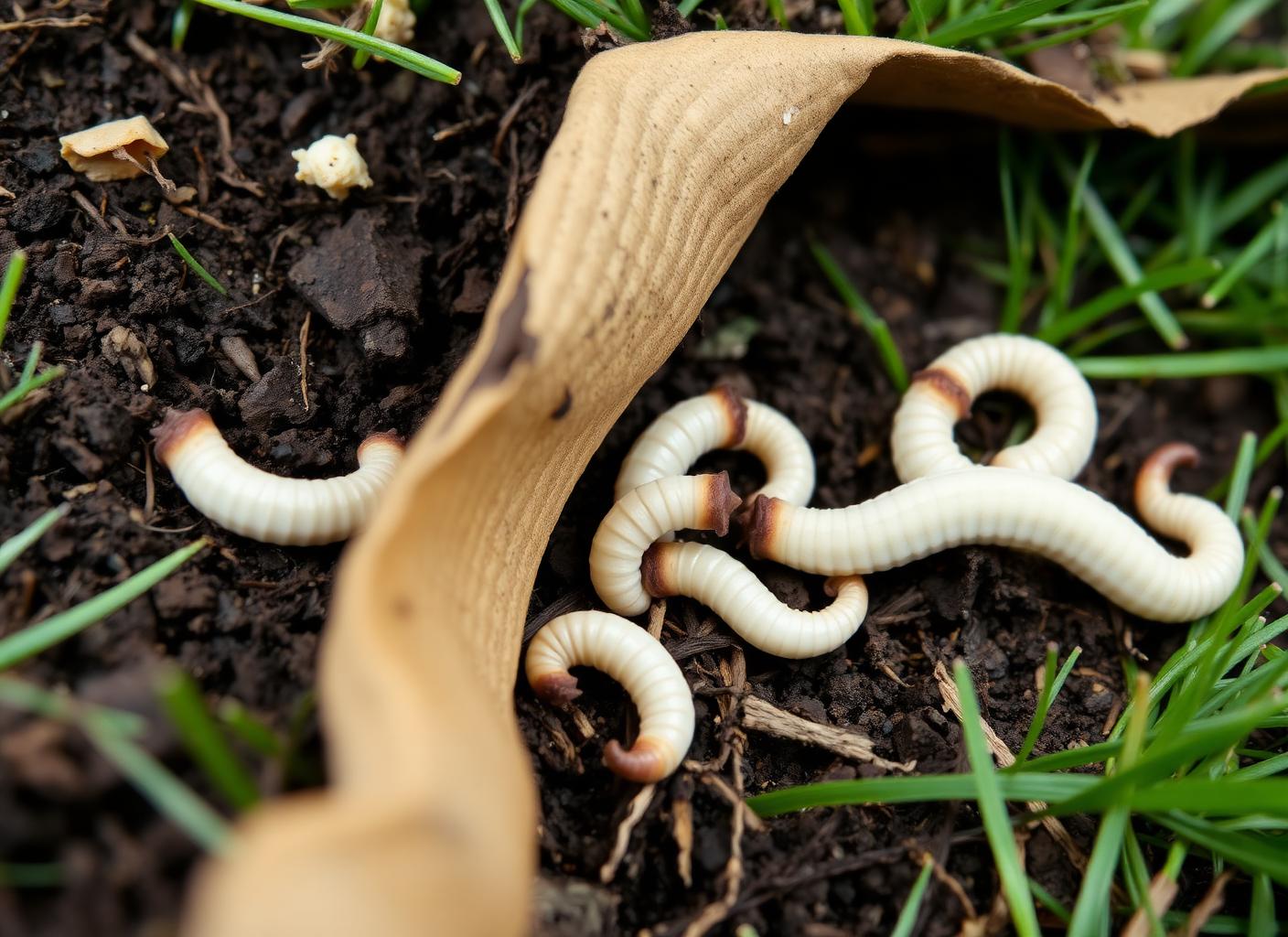
"White grubs" are the larval stage of several beetle species. Adults are active in summer and lay eggs in turf. Eggs hatch into small larvae that feed on grass roots, grow through the late season, move deeper as soil cools, and return toward the surface in spring before pupating into the next generation of adults.
Every treatment decision maps onto that cycle. Products aimed at prevention work best against very small larvae, which means the application has to be in place around egg hatch — not months before, and not after the population has grown large.
Two Approaches
Preventive vs. Curative Treatment
- Preventive. Applied ahead of or during early hatch. Targets very young larvae before meaningful root damage occurs. Suits lawns with known pressure or history.
- Curative. Applied when grubs are already present and feeding. Uses different active ingredients and is a response rather than insurance.
The two are not interchangeable. A preventive product applied to a lawn full of large grubs generally will not solve the problem, and a curative applied months early does not persist.
Assessment
Does Your Lawn Need Grub Prevention?
Blanket treatment is not automatically the right answer. Many Lancaster County lawns host low grub populations for years without visible damage, because healthy turf with a deep root system tolerates some feeding.
Prevention is more often warranted when:
- The lawn has been damaged by grubs in a previous season.
- Neighboring properties have visible grub damage.
- Heavy beetle activity was observed during the summer.
- Animals have been digging in the lawn.
- Turf is already thin and has little tolerance for additional root loss.
Diagnosis
How to Recognize Grub Damage
Grub damage often looks like drought stress at first: irregular brown patches that do not respond to watering. The distinguishing check is mechanical — affected turf tends to lift or roll back with little resistance because the roots have been severed.
Digging or foraging by skunks, raccoons and birds frequently accompanies it. Our grub damage guide walks through identification step by step.
Afterward
Repairing a Lawn After Grub Damage
Treatment stops feeding; it does not restore roots. Areas where turf died need to be re-established, which usually means seeding and, where soil has been disturbed or compacted, aeration first.
Fall often lines up well for this work, since overseeding conditions are frequently favorable at the same time grub damage becomes visible.
Grub Questions
Grub Prevention Timing FAQs
Prevention, diagnosis and what to do once damage appears.
Get My Free Lawn QuoteDoes every lawn need grub prevention?
No. Preventive treatment is generally considered where there is a history of grub damage, high beetle pressure, or a lawn where damage would be especially costly. Many lawns tolerate low grub populations with no visible effect.
What is the difference between preventive and curative treatment?
Preventive products are applied ahead of or during early hatch and target very young larvae. Curative products are applied when grubs are already present and feeding. They use different materials and different timing.
How do I know if grubs caused my brown patches?
The common check is lifting a section of affected turf. Grub-damaged turf often pulls up easily because roots have been severed, and larvae may be visible in the top few inches of soil.
Why is my lawn being dug up by animals?
Skunks, raccoons and birds feed on grubs and can tear turf while foraging. That kind of damage is often the first noticeable sign of a grub population.
Can you treat grubs in spring?
Spring treatment is possible but often less satisfying, because overwintered grubs are large, feed briefly and then pupate. Damage already done to roots does not reverse with treatment.
Does watering affect grub treatments?
Many soil-applied products need to move into the root zone where grubs are feeding, so irrigation or rainfall after application is often important. The product label specifies the requirement.
Will the lawn recover on its own?
Light damage can fill in with normal growth, especially with good conditions. Larger dead areas typically need seeding or repair, since the root system is gone.
Sources & References
- Penn State Extension — Lawn and Turfgrass resources for Pennsylvania homeowners (extension.psu.edu).
- Penn State Center for Turfgrass Science — general cool-season turfgrass management guidance.
Penn State Extension does not endorse Lawn Shield. References are provided because publicly available university turfgrass guidance informed the general practices described on this page.
Published by Lawn Shield
This guide is intended to provide general lawn-care education for Pennsylvania homeowners. Treatment timing and recommendations may vary based on weather, turf conditions and the property being treated.
Free Lawn Quote
Request Your Free Lancaster County Lawn Quote
Tell us about your lawn and we'll follow up with a program recommendation and pricing for your property. Programs start at $69 per application, based on a lawn up to 5,000 sq. ft.
- Free, no-obligation lawn quote
- Local Lancaster County lawn care team
- Program recommendation based on your lawn
Want Help With Your Lawn?
Concerned About Grubs?
Lawn care timing and treatment needs vary by property. Lawn Shield can help you determine the right next step for your Lancaster County lawn.
Serving Lancaster County, Pennsylvania