
Lawn Problem Guide
Signs of Lawn Grub Damage in Lancaster, PA
White grubs are beetle larvae that feed on turf roots below the surface. When feeding is heavy enough, turf loses anchorage and can lift or roll back. Several other problems produce similar browning, so confirming larvae in the root zone matters before treating.
Start Here
What Grubs Are and Why They Matter
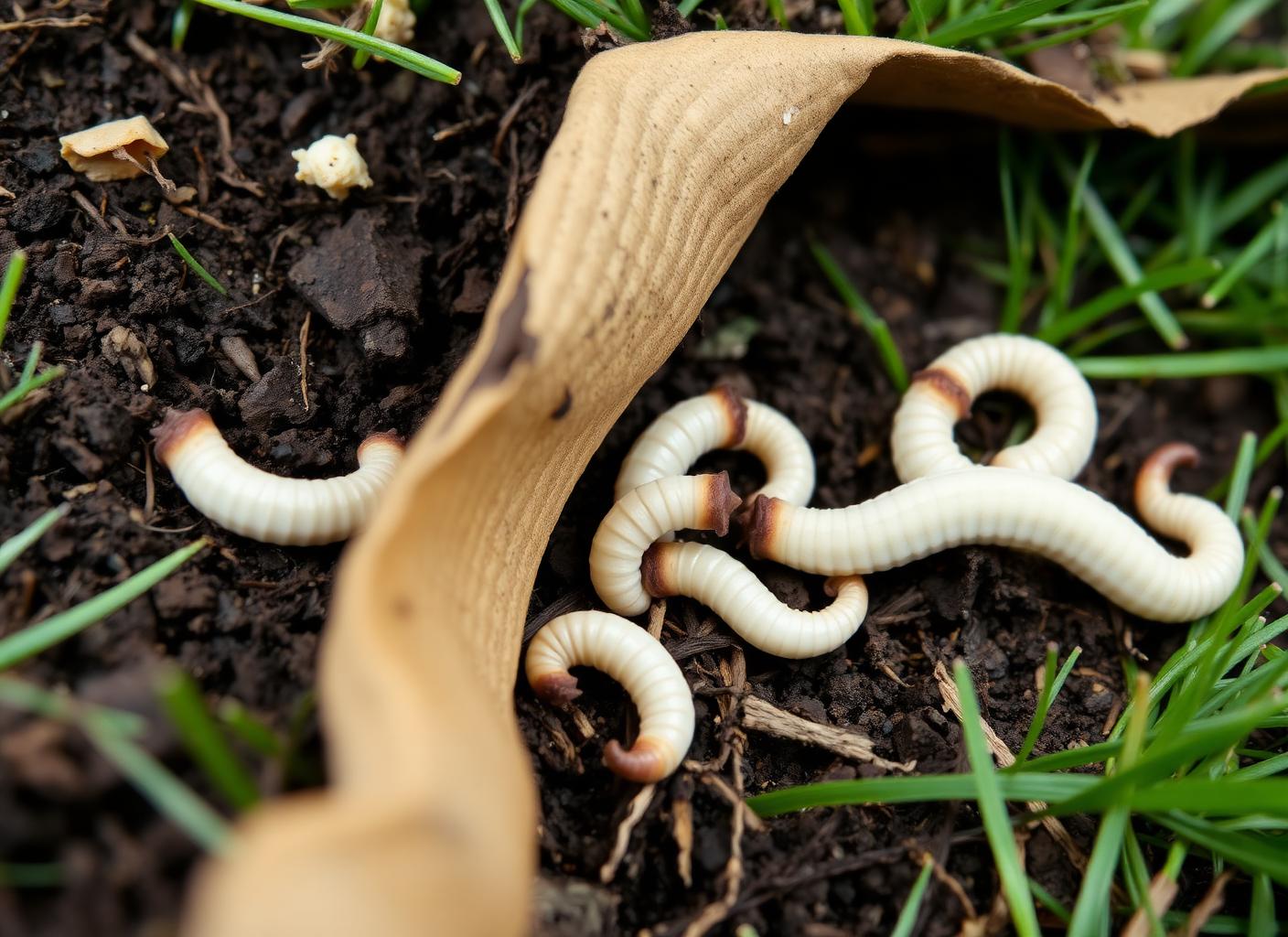
White grubs are the larval stage of several beetle species. They live in the upper soil, feeding on grass roots during parts of the season. Because the damage happens below ground, symptoms above ground can look like drought or disease long before anyone suspects insects.
The distinguishing feature of significant grub feeding is lost anchorage: with roots chewed away, sections of turf can be lifted like loose carpet. Lawns can tolerate some grubs without visible damage, which is why an inspection is more useful than an assumption.
Signs and Contributing Factors
What Grub Damage Tends to Look Like
Look for a combination of signs rather than relying on any single one.
Turf That Lifts Easily
Damaged areas may roll back with little resistance because the root system holding them in place has been reduced.
Irregular Brown Patches
Feeding damage often appears as irregular, expanding areas rather than the broad, even browning typical of dormancy.
Brown Grass GuideWilting Despite Moisture
Turf with reduced roots can wilt during warm days even when soil moisture is adequate.
Animal Digging
Skunks, raccoons and birds sometimes dig in turf while foraging. It is a reason to inspect, not proof of an infestation.
Damage That Returns Yearly
Recurring problems in the same areas may reflect ongoing beetle activity and site conditions that favor egg laying.
Already-Stressed Turf
Thin or heat-stressed lawns show grub damage sooner because there is less root system and less capacity to recover.
Thin & Patchy Grass
Look Closer Before You Treat
How to Check Before You Treat
A few minutes of inspection prevents treating for a pest that may not be there.
- Check 01
Can you fold back the turf at a damage edge?
Cut three sides of a small square and fold it back to view the root zone and upper inch or two of soil.
- Check 02
Do you see white, C-shaped larvae?
White grubs curl into a C shape and have distinct legs near the head end. Sample several locations, not just one.
- Check 03
Are roots present or largely gone?
Heavily reduced roots under otherwise intact turf support the grub explanation.
- Check 04
Do individual blades show lesions?
Spots or lesions on the leaves themselves suggest turf disease rather than root feeding.
Lawn fungus guide
Several lawn problems can produce similar symptoms. These guides are educational and do not replace an on-site lawn evaluation.
What Homeowners Can Do
Sensible Next Steps
- Inspect several spots before deciding anything — confirmation comes first.
- Replace the turf flap after sampling and water it in so the area can knit back together.
- Support recovery with sound mowing and watering practices; turf with a strong root system tolerates more feeding.
- Avoid blanket insecticide applications for damage that has not been confirmed as insect related.
- Plan repairs for damaged areas, since bare ground left open invites weed establishment.

When Professional Help Makes Sense
Prevention Is More Predictable Than Rescue
Preventive grub applications are timed to the part of the season when larvae are small and most vulnerable. Lawn Shield builds that timing into program schedules for Lancaster County properties.
Explore Grub ControlGrub Damage Questions
Grub Damage FAQs
How to check, what thresholds mean and when treatment is considered.
Request a Lawn EvaluationHow do I check for grubs in my lawn?
Cut three sides of a small square of turf near the edge of a damaged area and fold it back to inspect the root zone and upper soil. White, C-shaped larvae may be visible. Checking several spots gives a better picture than a single sample.
How many grubs are a problem?
Healthy, well-rooted turf can tolerate some grubs. Thresholds vary with grub species, turf condition and moisture, so counts are interpreted alongside how the lawn is actually performing rather than as a single universal number.
Does loose turf always mean grubs?
No. Drought stress, disease, poor rooting and recent seeding can all leave turf loosely anchored. Confirming larvae in the root zone is what separates grub damage from lookalikes.
Why are skunks or birds digging in my lawn?
Animals digging in turf can indicate they are foraging for insects, but they also dig for other reasons. Digging is a prompt to inspect the root zone rather than confirmation on its own.
What is the difference between preventive and curative grub treatment?
Preventive approaches are applied ahead of or during early larval development and are generally the more predictable option. Curative treatments target larger larvae already present, and outcomes can be less consistent depending on timing and grub size.
Related Lawn Shield Services
Related Lawn Problem Guides
Turf guidance informed by Penn State Extension recommendations for Pennsylvania lawns. Penn State Extension does not endorse Lawn Shield.
Free Lawn Quote
Request Your Free Lancaster County Lawn Quote
Tell us about your lawn and we'll follow up with a program recommendation and pricing for your property. Programs start at $69 per application, based on a lawn up to 5,000 sq. ft.
- Free, no-obligation lawn quote
- Local Lancaster County lawn care team
- Program recommendation based on your lawn
Turf Pulling Up Loose?
Confirm It Before You Treat It
Request a free evaluation and a technician will inspect the root zone and damage pattern before recommending anything.
Serving Lancaster County, Pennsylvania