Understand What's Happening Below the Surface
Lawn Soil Testing in Lancaster, PA
Healthy turf starts with understanding the conditions beneath the grass. Soil testing can provide useful information about soil chemistry and help guide lawn-management decisions.
What Does a Lawn Soil Test Tell You?
A standard soil test can provide information about soil pH and nutrient conditions and may include lime and fertilizer recommendations based on the type of plants or turf being managed.
Samples are analyzed through an appropriate soil-testing process, and Lawn Shield uses the results to help inform lawn-care recommendations where applicable. The specific analyses included depend on the testing process used — so it is worth asking what a given report covers rather than assuming.
Inside the Report
What a Lawn Soil Test Can Include
Depending on the analysis performed, a soil report can cover the following. Items such as nitrogen levels, organic matter, micronutrients, soil texture and environmental contaminants should not be assumed to be included.
Soil pH
Soil pH influences how available certain nutrients are to turf. Where pH is outside a favorable range, fertilizer alone may not produce the expected response.
Phosphorus
Where included in the analysis, phosphorus results help describe part of the soil's fertility picture.
Potassium
Where included in the analysis, potassium results contribute to fertility interpretation for the lawn.
Lime Requirement
Where applicable, a lime recommendation may be provided based on soil pH and the plants or turf being managed.
Fertility Recommendations
Where provided by the testing laboratory, recommendations help translate the numbers into practical lawn-management decisions.
The Case for Testing
Why Test Your Lawn's Soil?
- 01
Reduce Guesswork
Understand actual soil chemistry rather than making assumptions about what a lawn is missing.
- 02
Inform Fertility Decisions
Testing can help guide fertilizer and lime decisions instead of applying products by default.
- 03
Identify pH Issues
Soil pH can affect nutrient availability, and it is not something you can judge by looking at the lawn.
- 04
Create a Baseline
Testing provides information that can help guide future lawn management and track change over time.
Sampling Basics
How a Representative Lawn Sample Is Collected
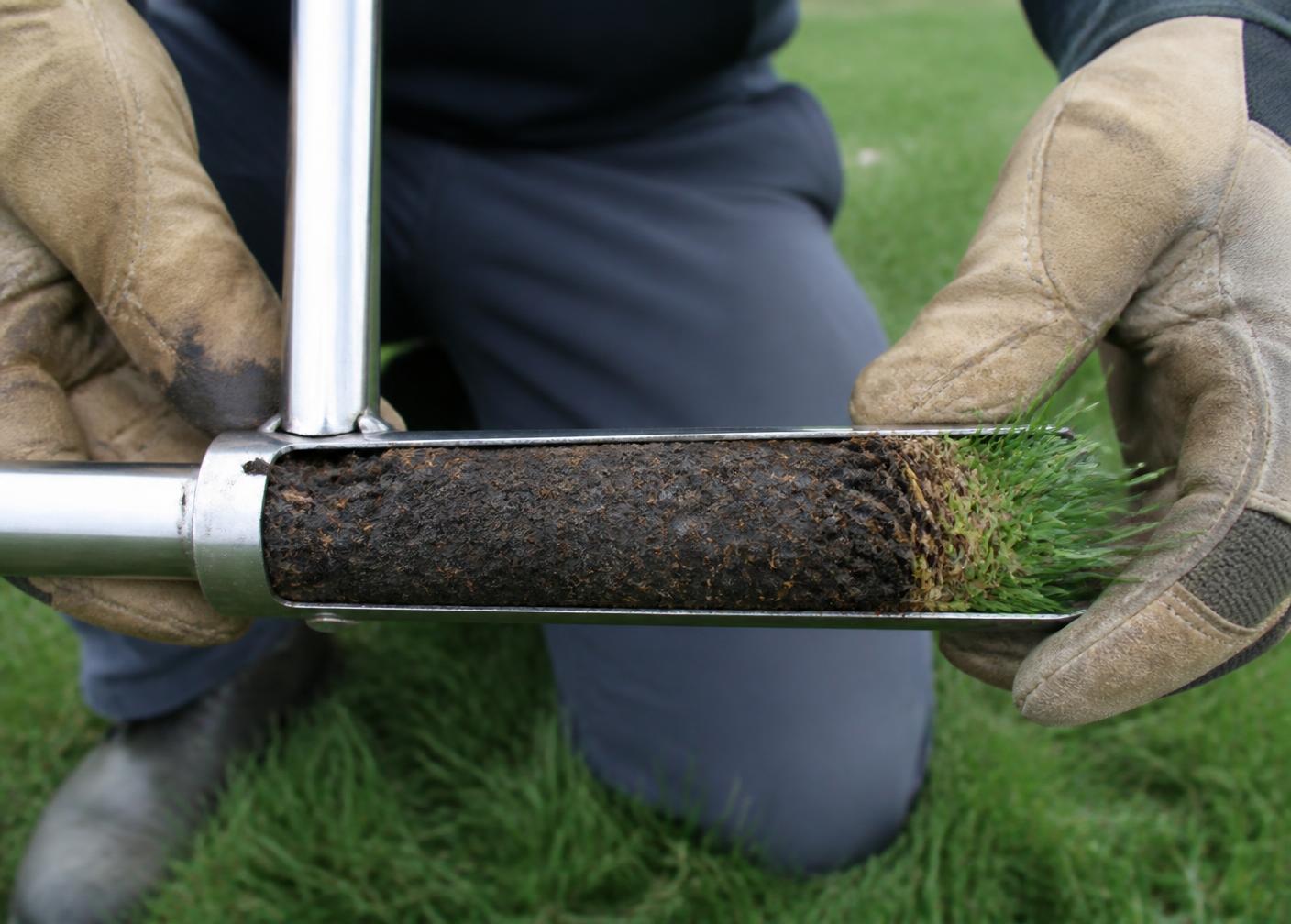
Penn State Extension recommends collecting multiple cores or slices from random locations across the lawn and combining them to create a single representative sample. A lawn rarely has uniform conditions from one corner to another, so a single scoop can be misleading.
Results are then used alongside what the lawn is showing above ground — fertilization decisions and aeration and overseeding planning both benefit from knowing the underlying soil conditions.
Turf guidance informed by Penn State Extension recommendations for Pennsylvania lawns.
Program Inclusion
Soil Testing Is Included With Lawn Shield Elite
A soil test is currently part of the Elite program only, alongside disease control and core aeration. Essential and Pro programs do not include soil testing.
Essential
5 Visits
Core fertilization, pre-emergent crabgrass control, weed control and grub prevention through the season.
- Best Value
Pro
6 Visits
Everything in Essential plus surface insect control, one free lawn treatment, a root stimulant bonus and unlimited service calls.
Elite
10 Visits
Our most complete program, adding disease control, core aeration and a professional soil test.
Programs start at $69 per application, based on a lawn up to 5,000 sq. ft.
Want the results put to work?
Soil information is most useful when it shapes the fertility plan for the season ahead.
Lancaster County Service
Lawn Soil Testing Throughout Lancaster County
Soil conditions can vary considerably from property to property across Lancaster County depending on site history, drainage, construction activity and past lawn management.
Testing is one way to replace assumptions with information before deciding what a lawn actually needs.
- Lawn care in Lancaster
- Lawn care in Lititz
- Lawn care in Manheim Township
- Lawn care in East Petersburg
- Lawn care in Mount Joy
- Lawn care in Ephrata
- Landisville
- Millersville
- Elizabethtown
- Strasburg
- New Holland
Soil Testing Questions
Lawn Soil Testing FAQs
Clear answers about what soil testing measures, what it does not, and how samples are collected.
Get Exact PricingWhat does a lawn soil test measure?
A standard soil test can provide information about soil pH and nutrient conditions, and may include lime and fertilizer recommendations based on the type of plants or turf being managed. The specific analyses included depend on the testing process used.
Why does soil pH matter for grass?
Soil pH influences nutrient availability. Where pH is outside a favorable range for turf, nutrients may be less available to the plant even when they are present in the soil — which is one reason fertilizer alone does not always produce the expected result.
How do you collect a lawn soil sample?
Penn State Extension recommends collecting multiple cores or slices from random locations across the area being tested and combining them into a single representative sample. Sampling one spot can misrepresent a lawn that varies from front to back.
Can soil testing tell me exactly why my grass is dying?
Not necessarily. Soil chemistry is one piece of the diagnostic picture. Insects, disease, compaction, shade, watering, mowing practices and weather can all affect turf performance, so soil results are interpreted alongside what the lawn itself is showing.
How often should lawn soil be tested?
Penn State notes that testing intervals can vary with soil texture and conditions. Rather than applying a rigid schedule to every property, testing is best repeated when it is likely to inform a decision — for example, when results may have shifted or a lawn is not responding as expected.
Does Lawn Shield test for contaminants or heavy metals?
Standard lawn soil testing should not be assumed to include environmental contaminant testing. Contact Lawn Shield regarding the specific analysis included.
Is soil testing included in every Lawn Shield program?
No. A soil test is currently included in the Elite program only. Essential and Pro do not include soil testing.
Free Lawn Quote
Request Your Free Lancaster County Lawn Quote
Tell us about your lawn and we'll follow up with a program recommendation and pricing for your property. Programs start at $69 per application, based on a lawn up to 5,000 sq. ft.
- Free, no-obligation lawn quote
- Local Lancaster County lawn care team
- Program recommendation based on your lawn
Free Lawn Quote
Stop Guessing About Your Soil
Request a Lawn Shield quote and learn whether soil testing should be part of your lawn-care strategy.
Lawn Soil Testing • Lancaster County, PA