
Lawn Problem Guide
Why Is My Grass Turning Brown in Lancaster, PA?
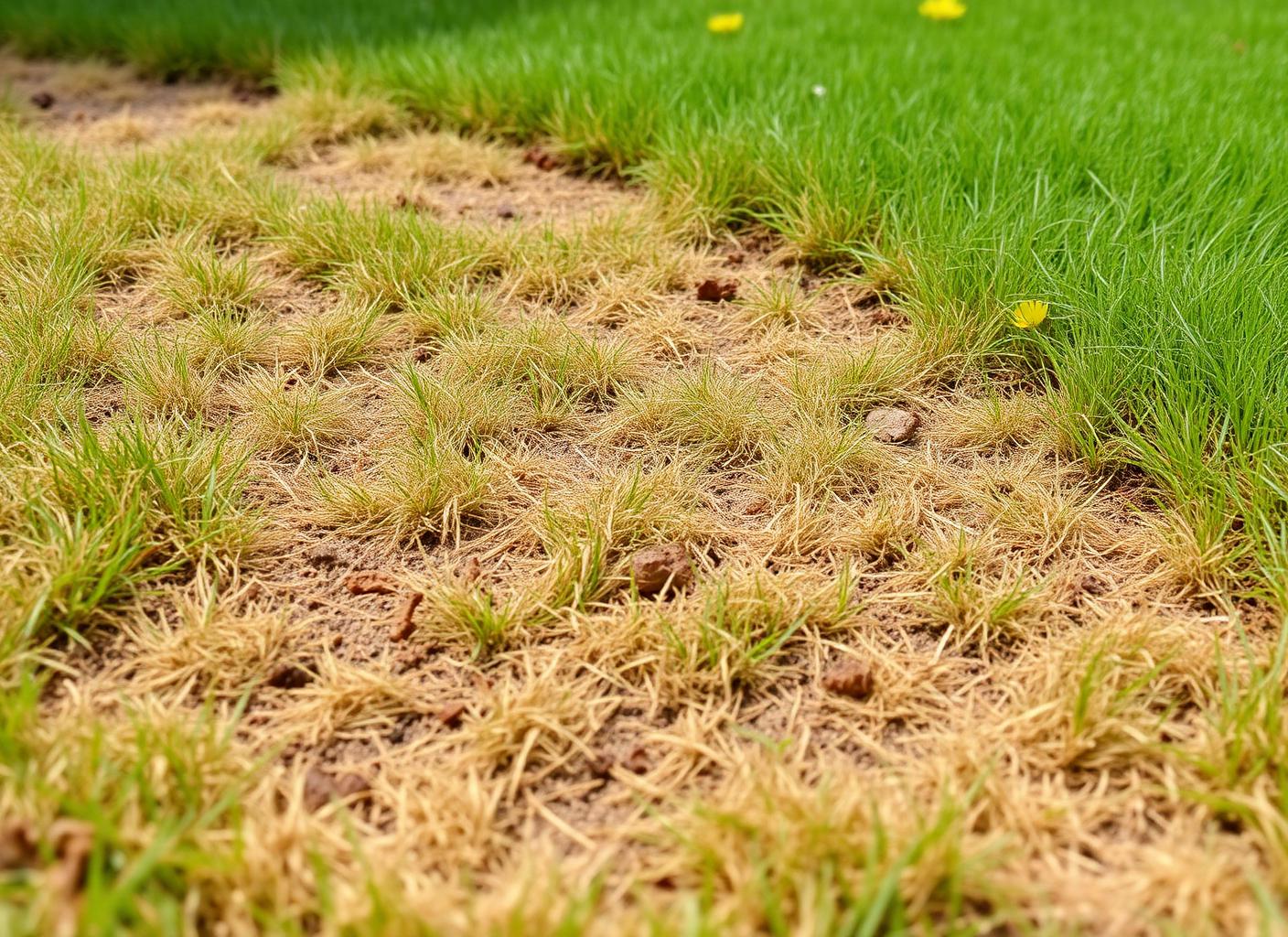
Brown grass usually means the turf is under stress — but the stress can come from heat and drought, insects feeding on roots, turf disease, soil conditions or mowing practices. Because several causes look similar from a distance, the color alone rarely identifies the problem.
Start Here
Brown Turf Is a Symptom, Not a Diagnosis
Lancaster County lawns are mostly cool-season grasses — Kentucky bluegrass, perennial ryegrass and fescues. These species grow most actively during the cooler parts of spring and fall and commonly slow down during summer heat. When soil moisture runs short, many cool-season lawns enter dormancy and turn tan or straw-colored.
Dormancy is a survival response, not necessarily damage. The difficulty is that root feeding insects, turf diseases, compacted soil and mowing or equipment issues can all produce browning that looks similar from the street. That is why identification starts with getting down at ground level and looking at individual plants.
Possible Causes
Common Reasons Lawns Turn Brown in Lancaster County
These are among the more frequent explanations we see in Pennsylvania lawns. More than one can be present at the same time.
Heat and Drought Stress
During hot, dry stretches cool-season turf often slows growth and goes dormant. Browning is usually broad, worst in full sun and along pavement, and the crowns stay firm.
Turf Disease Activity
Warm nights, extended leaf wetness and humidity can favor certain turf diseases, which often show patches plus lesions or discoloration on individual blades.
Lawn Disease ControlWhite Grubs Feeding on Roots
Grubs feed on turf roots below the surface. Affected turf may brown in irregular patches and can lift or roll back where root loss is significant.
Grub ControlSurface-Feeding Insects
Chinch bugs and sod webworms feed at or near the soil surface and can cause thinning, browning areas that often expand during hot, dry weather.
Surface Insect ControlCompacted Soil and Poor Rooting
Compaction can limit air and water movement in the root zone, which may leave turf less able to tolerate stress periods.
Compacted Soil GuideMowing and Equipment Issues
Mowing too short, mowing stressed turf or cutting with dull blades can cause frayed, whitish-brown leaf tips across the whole lawn rather than in patches.
Soil Fertility and pH
Nutrient availability and soil pH influence turf color and vigor. A soil test provides measured values instead of guesses.
Soil TestingPet Urine and Spills
Small, sharply defined brown spots — often with a darker green ring — commonly trace back to pet urine, fuel spills or fertilizer spills rather than pests.
Thin Turf Under Stress
Thin lawns have less shade at the soil surface and fewer plants to recover, so stress often shows earlier and looks worse.
Thin & Patchy Grass
Look Closer Before You Treat
How to Look Closer at Brown Grass
These checks help narrow the possibilities. They are observations, not a diagnosis.
- Check 01
Does the turf lift or roll back easily?
Loose turf with few roots can point toward root feeding. Tug gently at the edge of a brown area and see whether the plants stay anchored.
Grub damage guide - Check 02
Is the browning uniform or patchy?
Broad, even browning across sunny areas is more consistent with heat and drought. Defined patches, rings or spots point elsewhere.
Lawn fungus guide - Check 03
What do individual blades look like?
Lesions, banded spots or bleached tips on individual leaves suggest something different from simple dormancy. Frayed tips across the whole lawn suggest mowing equipment.
- Check 04
Where is the damage located?
Edges along driveways and south-facing slopes dry out first. Shaded, damp areas and low spots behave differently and can point to other causes.
Several lawn problems can produce similar symptoms. These guides are educational and do not replace an on-site lawn evaluation.
What Homeowners Can Do
Reasonable Steps While You Figure It Out
- Raise mowing height during summer and avoid removing more than about one-third of the leaf blade in a single mowing.
- Keep mower blades sharp — dull blades tear leaf tissue and can make a lawn look browner within a day or two of mowing.
- If you irrigate, water deeply and less frequently rather than lightly every day, and favor morning watering so leaves dry sooner.
- Limit traffic on dormant or stressed turf. Foot and equipment traffic on dry lawns can cause lasting damage.
- Hold off on heavy fertilizer or blanket treatments until the cause is understood. Some products applied to stressed turf make matters worse.
When Professional Help Makes Sense
A Lawn Evaluation Beats a Guess
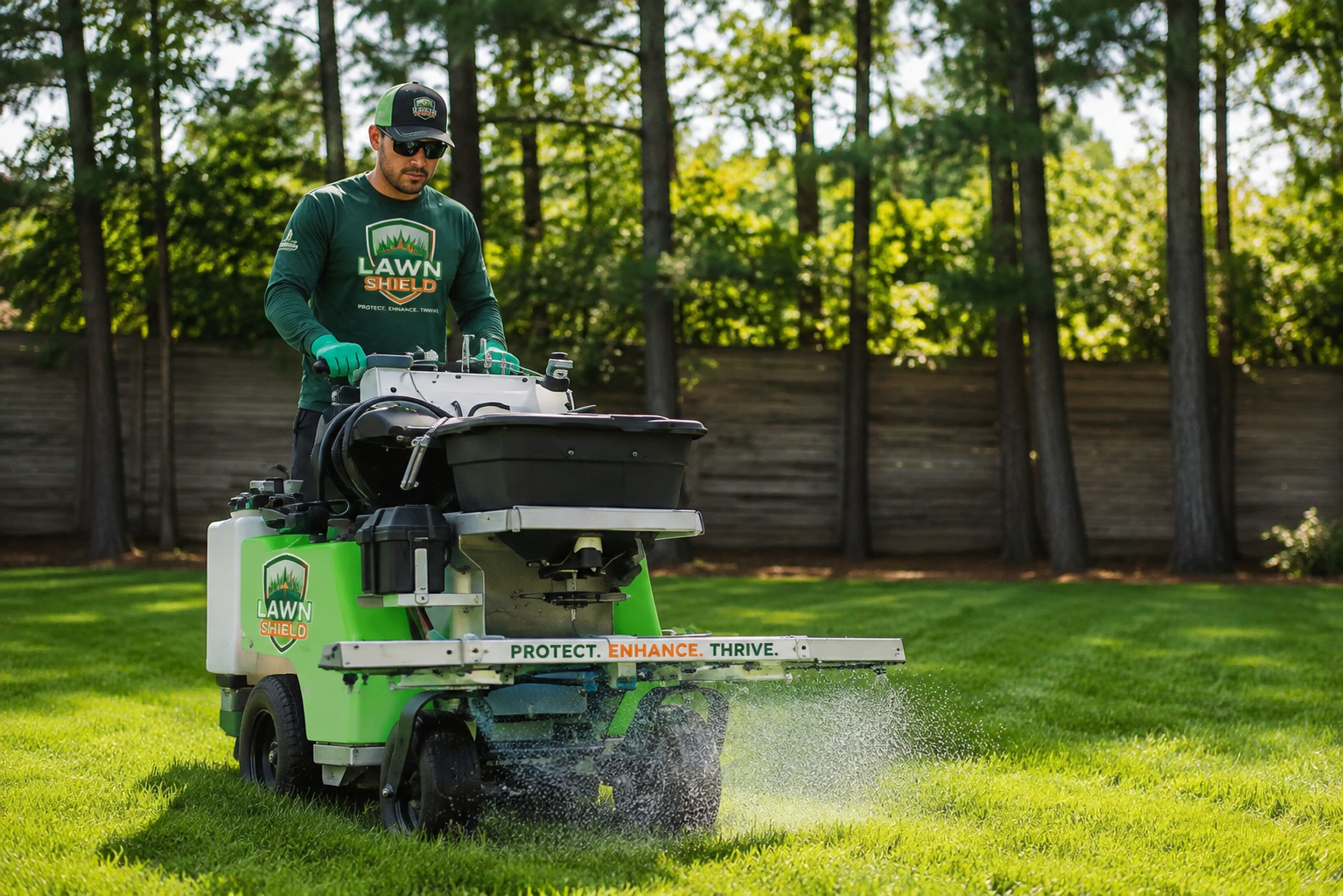
Lawn Shield technicians look at the turf, the pattern of damage and the site conditions before recommending anything. When browning is tied to fertility or turf density, a balanced fertilization program is often part of the answer.
Explore Lawn FertilizationBrown Grass Questions
Brown Lawn FAQs for Lancaster County Homeowners
Straightforward answers about dormancy, damage and what to do next.
Request a Lawn EvaluationDoes brown grass always mean the lawn is dead?
No. Cool-season lawns can go dormant during hot, dry stretches and often recover when temperatures moderate and moisture returns. Dormant turf and dead turf can look similar from a distance, so a closer look at the crowns and roots is important.
How can I tell dormancy from drought damage?
Dormant turf usually browns fairly uniformly across sunny, exposed areas and the crowns at the base of the plant remain firm. Damage from insects or disease more often appears in irregular patches, and affected plants may pull up easily or show lesions on individual blades.
Should I water a brown lawn?
Watering practices depend on conditions, soil and the cause of the browning. Penn State Extension generally recommends deep, infrequent watering rather than light daily watering when supplemental irrigation is used. Frequent shallow watering can favor certain turf problems.
Will fertilizer green up a brown lawn?
Not necessarily. Fertilizing turf that is under heat or drought stress can add stress rather than help. Timing and rates matter, and applications are best matched to turf condition and the season.
When should I have someone look at it?
If browning spreads, appears in defined patches, returns each year in the same place or the turf lifts easily from the soil, an on-site evaluation can help identify what is happening before treatments are chosen.
Related Lawn Shield Services
Related Lawn Problem Guides
Turf guidance informed by Penn State Extension recommendations for Pennsylvania lawns. Penn State Extension does not endorse Lawn Shield.
Free Lawn Quote
Request Your Free Lancaster County Lawn Quote
Tell us about your lawn and we'll follow up with a program recommendation and pricing for your property. Programs start at $69 per application, based on a lawn up to 5,000 sq. ft.
- Free, no-obligation lawn quote
- Local Lancaster County lawn care team
- Program recommendation based on your lawn
Brown Spots Spreading?
Find Out What's Actually Causing It
Request a free evaluation and a Lawn Shield technician will look at your turf, soil and damage pattern before recommending a treatment approach.
Serving Lancaster County, Pennsylvania