
Grub Control & Prevention
Grub Control & Prevention in Lancaster, PA
White grubs feed on turf roots beneath the surface, often causing damage that doesn't show up until it's already serious. Lawn Shield's preventive grub treatments are timed to stop the problem before it reaches your lawn.
Serving Lancaster and communities throughout Lancaster County, Pennsylvania.

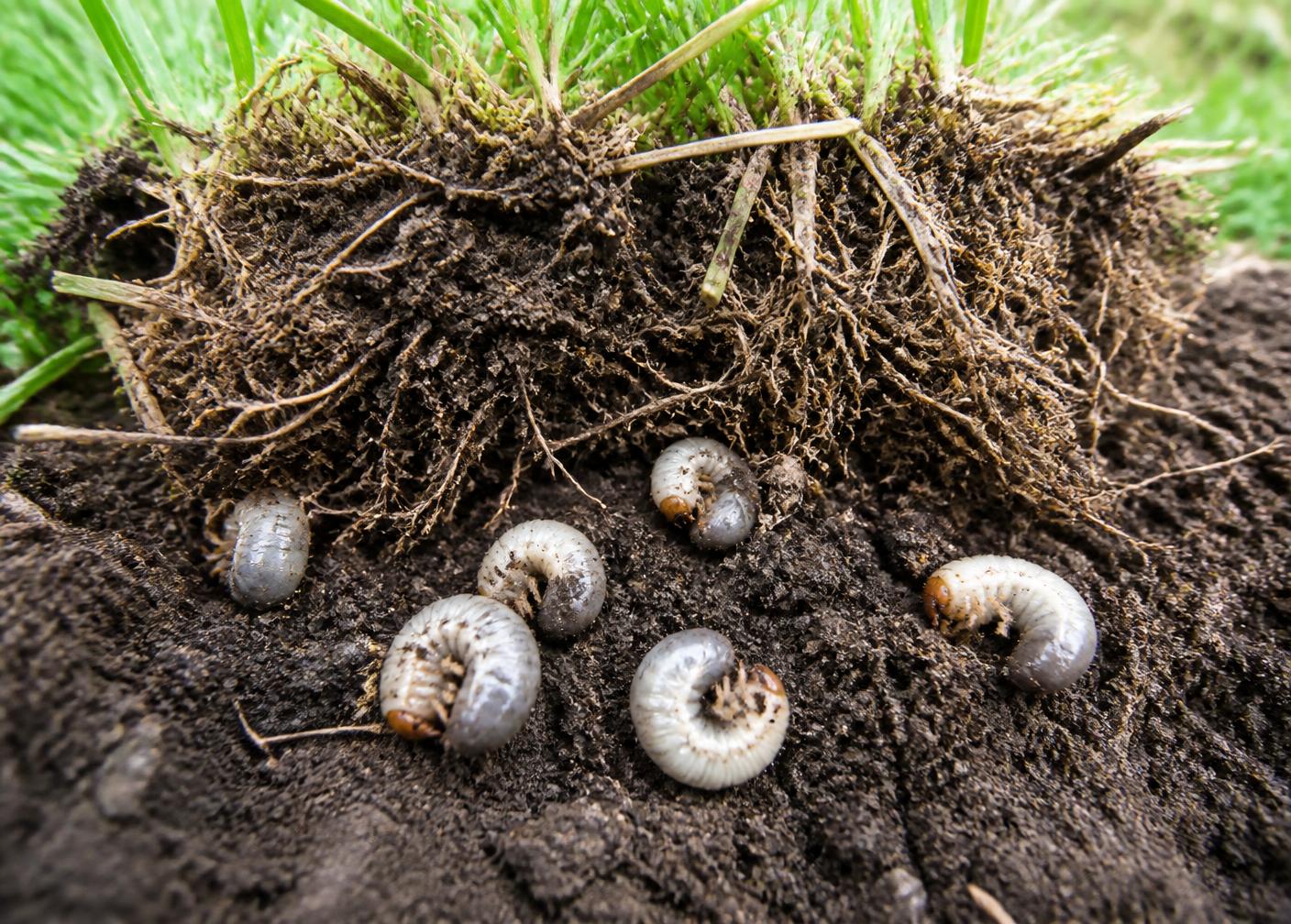
What Are White Grubs, and Why Do They Damage Lawns?
White grubs are the larvae of beetles such as Japanese beetles and masked chafers. While underground, they feed on grass roots — and it's that root feeding, not the beetles themselves, that causes turf damage.
Because grubs feed on roots rather than blades, damage is often not visible until enough root mass has been lost that the grass can no longer support itself. That is one reason preventive treatment as part of a lawn fertilization and weed control program tends to hold up better than waiting to react.
Healthy, well-rooted turf with consistent watering also tends to tolerate some grub feeding better than a lawn that is already stressed — another reason grub prevention works best alongside good overall lawn care rather than as an isolated treatment.
The Grub Life Cycle
Understanding the Cycle Is What Makes Timing Work
Grubs move through distinct stages across the year in Lancaster County. Treatment timed to the right stage is far more effective than treatment applied after the fact.
- 01
Eggs Laid
Adult beetles lay eggs in turf during mid to late summer, usually after periods of rain when soil is moist.
- 02
Larvae Feeding
Eggs hatch into small white grubs that begin feeding on grass roots close to the soil surface in late summer and early fall — the period when most turf damage appears.
- 03
Overwinter
As temperatures drop, grubs move deeper into the soil and remain inactive through winter, resuming some feeding briefly in spring before pupating.
- 04
Adult Beetles
Grubs pupate and emerge as adult beetles — Japanese beetles, masked chafers and others — starting the cycle again the following summer.
Signs of Grub Damage
How to Recognize a Grub Problem
Irregular Brown Patches
Turf develops uneven, ragged patches of brown or dying grass, often appearing first in the sunniest or thinnest areas of the lawn.
Turf Pulls Up Like Carpet
Because grubs sever grass roots, affected sections of lawn can feel spongy underfoot and lift away from the soil in loose sheets, almost like a rug.
Digging From Animals
Skunks, raccoons and birds feed on grubs and will tear up turf searching for them, which is often how homeowners first notice a problem.
Damage Spreads in Late Summer
Because grubs are actively feeding near the surface at that time, symptoms often become noticeable in late summer and early fall rather than earlier in the season.
Not every brown patch is grubs. Drought stress, fungal disease and other insects can look similar, which is why proper diagnosis matters before deciding on treatment.
Timing Matters
Prevention vs. Curative Treatment
Grub control can be applied before or after damage occurs, but the two approaches are not equally reliable.
Prevention
Applied in early summer, before eggs hatch.
- Targets young larvae while they are small and easiest to control
- Far more consistent results than treating an established infestation
- Fits naturally into a season-long lawn program
Curative
Applied after damage is already visible, typically late summer or fall.
- Targets larger, more mature grubs that are harder to control
- Results are less predictable and turf damage may already be done
- Sometimes still necessary depending on when a problem is discovered
Program Inclusion
Grub Prevention Is Included in Every Lawn Shield Program
Grub prevention is built into every Lawn Shield lawn-care program — Essential, Pro and Elite — applied at the appropriate point in the season alongside fertilization and weed control.
Essential
5 Visits
Core fertilization, pre-emergent crabgrass control, weed control and grub prevention through the season.
- Best Value
Pro
6 Visits
Everything in Essential plus surface insect control, one free lawn treatment, a root stimulant bonus and unlimited service calls.
Elite
10 Visits
Our most complete program, adding disease control, core aeration and a professional soil test.
Programs start at $69 per application, based on a lawn up to 5,000 sq. ft.

Local & Trusted
A Lancaster County Team You Can Count On
Lawn Shield is based in Lancaster County and treats lawns across the area's varied soil types and microclimates. That local footprint means treatments — including grub prevention — are timed to conditions here, not a generic national calendar.
If a lawn already has grub damage, our team can also help with aeration and overseeding to repair damaged areas, and can help distinguish grub damage from crabgrass or other turf problems.
Request a Free Lawn EvaluationLancaster County Service
Grub Control Throughout Lancaster County
Lawn Shield provides grub prevention and control for lawns throughout Lancaster County, from the city of Lancaster to surrounding townships and boroughs. Beetle pressure and soil conditions vary across the area, and treatment timing accounts for that.
Choose your community below to learn more about grub control near you, or call and we'll confirm service for your address.
- Lawn care in Lancaster
- Lawn care in Lititz
- Lawn care in Manheim Township
- Lawn care in East Petersburg
- Lawn care in Mount Joy
- Lawn care in Ephrata
- Landisville
- Millersville
- Elizabethtown
- Strasburg
- New Holland
Grub Control Questions
Grub Control FAQs
Straightforward answers about grub timing, diagnosis and pricing in Lancaster County.
Get Exact PricingWhen should grub control be applied in Pennsylvania?
Preventive grub control is generally most effective when applied in early summer, ahead of egg hatch. Waiting until damage appears in late summer or fall limits options to curative treatment, which is less reliable on mature grubs.
How can I tell if I actually have a grub problem?
Common signs include irregular brown patches, turf that feels spongy and pulls up easily like a loose carpet, and digging from skunks, birds or raccoons searching for grubs to eat. Confirming grubs is best done by checking under damaged turf rather than assuming based on brown grass alone.
How many grubs per square foot is considered a problem?
Thresholds vary by turf type, lawn health and local guidance, but a small number of grubs is common in most lawns and does not necessarily mean visible damage will occur. Higher grub counts concentrated in an area are more likely to cause noticeable turf loss.
Does grub control also help with other lawn insects?
Grub control products are specifically formulated to target white grub larvae. They are not a general insect treatment, and other lawn pests may require separate identification and treatment.
Will my lawn recover from grub damage, or do I need to reseed?
Recovery depends on how much root damage occurred. Lightly affected turf can often recover with proper care, while more severely damaged areas may need aeration and overseeding to fill back in.
Is every brown patch in my lawn caused by grubs?
No. Drought stress, fungal disease and other insects can all cause brown patches that look similar to grub damage. Proper diagnosis matters before deciding on a treatment approach, since the wrong treatment will not solve the underlying problem.
How much does grub control cost in Lancaster, PA?
Grub prevention is included in every Lawn Shield program — Essential, Pro and Elite. Programs currently start at $69 per application based on a lawn up to 5,000 sq. ft., with exact pricing depending on lawn size and selected program.
Grub damage already showing?
Aeration and overseeding can help thin, damaged turf fill back in once the underlying grub problem is addressed.
Free Lawn Quote
Request Your Free Lancaster County Lawn Quote
Tell us about your lawn and we'll follow up with a program recommendation and pricing for your property. Programs start at $69 per application, based on a lawn up to 5,000 sq. ft.
- Free, no-obligation lawn quote
- Local Lancaster County lawn care team
- Program recommendation based on your lawn
Free Lawn Evaluation
Protect Your Lawn Before Grubs Take Hold
Get a free Lawn Shield quote and find the right lawn-care program for your Lancaster County property.
Professional Grub Control & Prevention • Lancaster County, PA