
Professional Lawn Weed Control
Weed Control in Lancaster, PA
Fight unwanted weeds without losing sight of overall lawn health. Lawn Shield combines preventative and targeted weed-control strategies with professional lawn-care programs designed for Lancaster County properties.
Serving Lancaster, Lititz, Ephrata, Mount Joy and surrounding Lancaster County communities.
How Does Professional Lawn Weed Control Work?
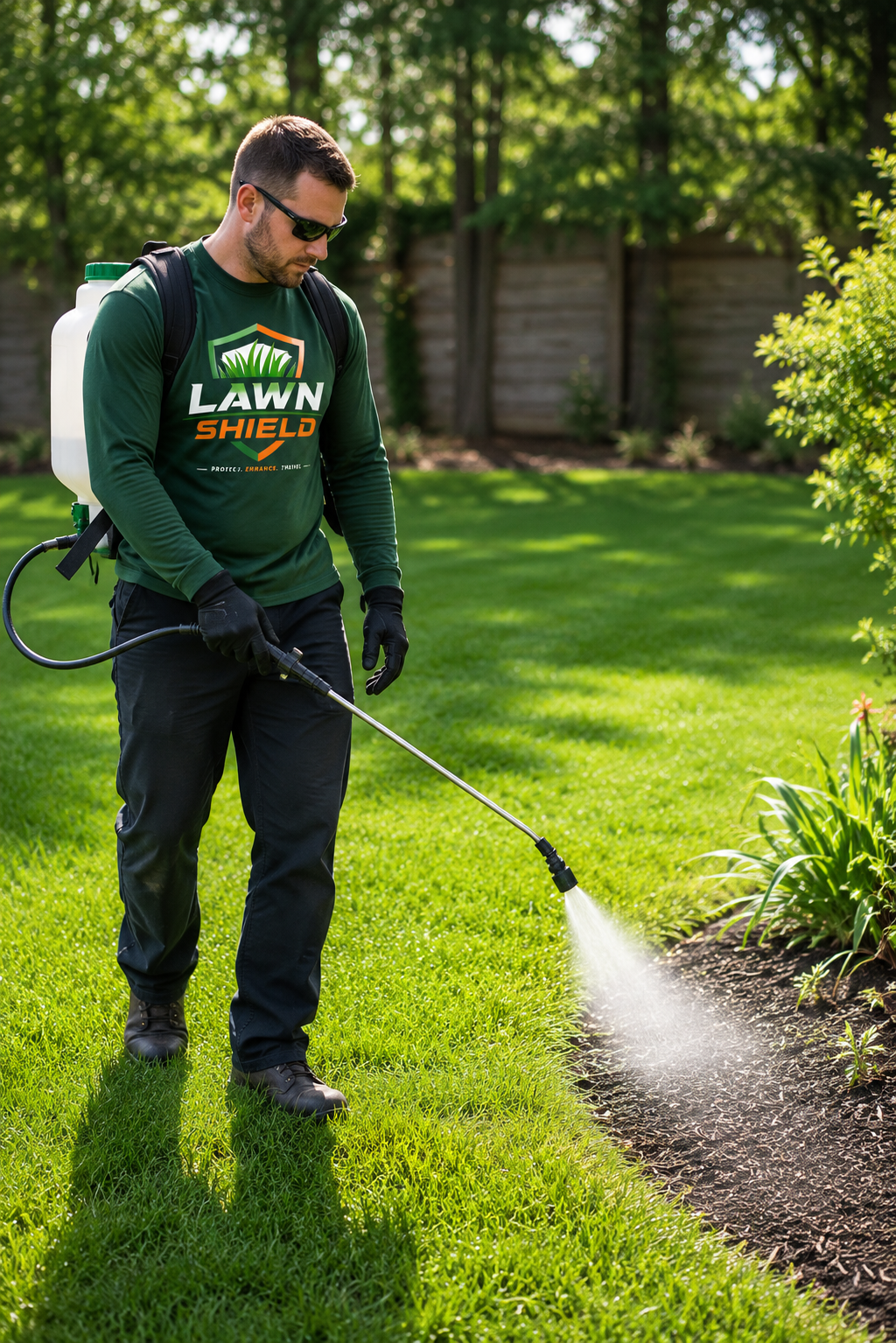
Professional lawn weed control can involve both preventative and post-emergent treatments. Preventative applications target certain weeds before they establish, while targeted treatments address weeds already growing in the lawn. The right approach depends on the weed, season and condition of the turf.
Because weed pressure changes through the year, weed management is scheduled across a full program rather than handled in a single visit — and it is paired with professional lawn fertilization in Lancaster so the turf itself keeps getting stronger.
Weed Identification
Common Weeds Found in Lancaster County Lawns
These are common weeds Lawn Shield may encounter on Lancaster County properties. Identifying what's actually growing in the lawn shapes how it's treated.
Crabgrass
Annual grassy weed that becomes particularly noticeable during warmer weather, often along driveways, sidewalks and thin edges.
Crabgrass ControlDandelions
Highly recognizable broadleaf weed capable of spreading through seed, which is why they often reappear across a neighborhood at once.
White Clover
Low-growing broadleaf plant commonly seen within turf, frequently in areas where turf density is lower.
Plantain
Broadleaf weed often found in lawns, including areas affected by compaction and heavy foot traffic.
Chickweed
Low-growing weed that can appear in cool, moist conditions, sometimes spreading into mats across thin turf.
Nutsedge
Grass-like plant that differs biologically from true grasses and can require a different management approach than broadleaf weeds.
Crabgrass
Crabgrass Control in Lancaster, PA
Crabgrass is one of the most common frustrations for Lancaster County homeowners because it tends to appear once summer is already underway — after the most effective preventative window has passed.
Properly timed pre-emergent treatment can play an important role in preventing crabgrass from establishing in the first place, which is why it is built into Lawn Shield programs rather than added later in the season.
Learn About Crabgrass ControlPrevention
Pre-emergent applications are made before crabgrass germinates, aiming to stop plants from establishing. Timing is tied to soil conditions and the season rather than a set date.
After Emergence
Once crabgrass is visibly growing, treatment options depend on the plant's growth stage, the surrounding turf and weather. Results can vary considerably compared with prevention.
Treatment Types
Pre-Emergent vs. Post-Emergent Weed Control
Pre-Emergent
Designed to target certain weeds before they establish.
Timing matters more here than with any other treatment. Applied too late, the window closes; applied thoughtfully, prevention reduces how much weed pressure the lawn faces later in the season.
Post-Emergent
Targets weeds that are already actively growing.
Treatment choice depends on weed type, turf type and conditions at the time of the visit. Some weeds respond quickly; others need follow-up on a later visit.
A successful weed-control strategy may use different approaches throughout the growing season.
Protect. Enhance. Thrive.
Why Do Weeds Keep Growing in My Lawn?
Weeds returning does not automatically mean a treatment failed. Several conditions can keep a lawn hospitable to unwanted plants.
The long-term goal isn't simply to spray weeds. It's to build healthier, denser turf that is better able to compete with unwanted plants.
- Thin turf
- Bare areas
- Soil compaction
- Seasonal weed cycles
- Weed seeds already present in the soil
- Turf stress from heat or drought
- Improper mowing practices
- Environmental conditions
Better Together
Why Weed Control and Fertilization Work Together
Weed management targets the plants you don't want. Fertilization supports the turf you do. Treating either one in isolation tends to produce short-lived results — spraying alone leaves thin turf that weeds can re-colonize, and feeding alone lets existing weeds keep competing for space, light and water.
A stronger lawn strategy considers both, along with practices such as aeration and overseeding that improve turf density over time.
Explore Lawn Fertilization in Lancaster, PALawn Shield Programs
Weed Control Is Built Into Every Lawn Shield Program
Fertilization and weed control are the foundational services within the Lawn Shield program structure. Each program layers additional seasonal treatments on top of that base.
Essential
5 Visits
Core fertilization, pre-emergent crabgrass control, weed control and grub prevention through the season.
- Best Value
Pro
6 Visits
Everything in Essential plus surface insect control, one free lawn treatment, a root stimulant bonus and unlimited service calls.
Elite
10 Visits
Our most complete program, adding disease control, core aeration and a professional soil test.
Programs start at $69 per application, based on a lawn up to 5,000 sq. ft.
Lancaster County Service
Lawn Weed Control Throughout Lancaster County
Weed pressure looks different across Lancaster County. Older neighborhoods often deal with compaction and plantain, while newer developments frequently see crabgrass along thin edges and freshly established turf.
Lawn Shield treats residential lawns across the county and adjusts weed-control strategy to what's actually growing on the property.
- Lawn care in Lancaster
- Lawn care in Lititz
- Lawn care in Manheim Township
- Lawn care in East Petersburg
- Lawn care in Mount Joy
- Lawn care in Ephrata
- Landisville
- Millersville
- Elizabethtown
- Strasburg
- New Holland
Weed Control Questions
Lancaster PA Weed Control FAQs
Honest answers about lawn weeds, treatment timing and what professional weed control can realistically do.
Get Exact PricingWhat weeds are common in Lancaster County lawns?
Crabgrass, dandelions, white clover, plantain, chickweed and nutsedge are among the plants Lawn Shield may encounter in Lancaster County lawns. Which weeds show up on a given property depends on turf density, soil conditions, mowing practices and the time of year.
When should crabgrass preventer be applied?
Pre-emergent timing follows soil temperature and seasonal conditions rather than a fixed date. Applications are generally made before crabgrass germinates as soils warm in spring, and that window shifts from year to year with the weather.
Can you kill weeds without killing the grass?
Selective treatments are designed to target certain weeds while being appropriate for certain turf types. Whether a selective approach fits depends on the weed species, the grass type and the condition of the lawn, which is why treatments are chosen per visit rather than applied uniformly.
Why do dandelions keep returning?
Dandelions spread readily by seed, including from untreated properties nearby, and can regrow from established root systems. Treating existing plants helps, but thin turf leaves open space for new seedlings to establish.
Does fertilization help prevent weeds?
Dense, healthy turf competes better against weeds, so a well-fed lawn typically has less open space for weeds to occupy. That said, fertilization itself is not a weed-control treatment — it supports the grass rather than targeting the weeds.
Do you treat crabgrass?
Yes. Pre-emergent crabgrass prevention is included in applicable Lawn Shield programs, and treatment decisions after emergence depend on the season and the condition of the turf.
How long does professional weed control take to work?
There is no universal timeframe. Visible response varies by weed species, the product used, the weed's growth stage, temperature and weather following the application. Some weeds show change within days; others take considerably longer or require follow-up during a later visit.
How much does Lawn Shield weed control cost?
Weed control is part of Lawn Shield's lawn-care programs rather than a standalone charge. Programs currently start at $69 per application based on a lawn up to 5,000 sq. ft.. Exact pricing depends on lawn size, program and services.
Free Lawn Quote
Request Your Free Lancaster County Lawn Quote
Tell us about your lawn and we'll follow up with a program recommendation and pricing for your property. Programs start at $69 per application, based on a lawn up to 5,000 sq. ft.
- Free, no-obligation lawn quote
- Local Lancaster County lawn care team
- Program recommendation based on your lawn
Free Lawn Evaluation
Ready to Take Back Your Lawn?
Get a free quote for professional lawn care and weed control from Lawn Shield.
Serving Lancaster County, Pennsylvania