
Lawn Problem Guide
Clover in Your Lancaster, PA Lawn: Identification and Options
White clover is a low-growing perennial legume that spreads by creeping stems and seed. It competes with turfgrass for space and light, and it often becomes noticeable in lawns that are thin, worn or lower in available nitrogen.
Identification
How to Recognize White Clover
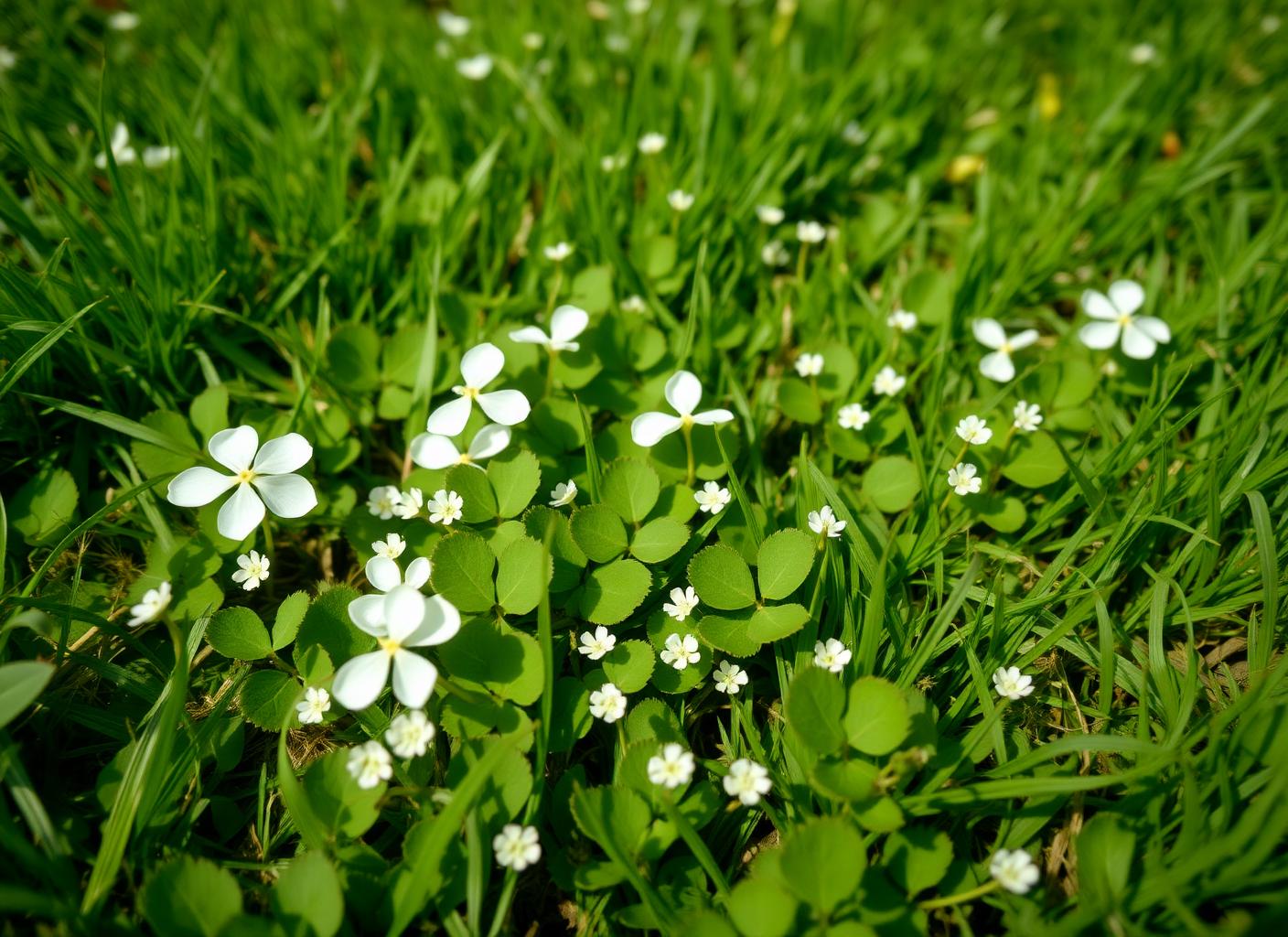
White clover carries three rounded leaflets, frequently with a lighter crescent-shaped marking, on stems that creep along the soil surface. Round white to pale-pink flower heads appear through much of the growing season and are commonly visited by bees.
Because clover roots at nodes along its creeping stems, patches expand outward and knit into the turf. That is why clover often looks like it appeared all at once when it has actually been spreading gradually.
Why It Shows Up
Conditions Where Clover Competes Well
Clover succeeds where turfgrass is less competitive. These are common contributors in Lancaster County lawns.
Lower Nitrogen Availability
As a legume, clover can access nitrogen through soil bacteria, which may give it an edge when turf nitrogen is limited.
Lawn FertilizationThin or Worn Turf
Creeping stems establish quickly across open ground, so thin lawns give clover room to expand.
Thin & Patchy GrassCompacted Soil
Compaction limits turf rooting, and clover frequently persists in areas where grass struggles.
Compacted Soil GuideLow Mowing Heights
Clover growing points sit low. Short mowing removes more grass leaf tissue than clover foliage.
Dry Summer Periods
Clover often stays green while cool-season turf slows or goes dormant, which makes existing patches far more visible.
Soil pH and Fertility Imbalance
Soil chemistry affects how well turf competes. Measured values from a soil test are more useful than assumptions.
Soil Testing
Look Closer Before You Treat
Clover or a Lookalike?
Several broadleaf weeds are mistaken for clover in home lawns.
- Check 01
Are there exactly three rounded leaflets?
White clover has three rounded leaflets. Oxalis has three heart-shaped leaflets and yellow flowers, which is a common mix-up.
- Check 02
Are the flowers white and round?
Round white to pale-pink flower heads point to white clover. Yellow flowers suggest oxalis or black medic instead.
- Check 03
Do stems creep along the ground and root?
Stolons rooting at nodes are typical of white clover and explain how patches widen over time.
- Check 04
Is clover concentrated in weak turf areas?
Patterns that follow thin, compacted or shaded areas suggest turf competitiveness is the underlying issue.
Several lawn problems can produce similar symptoms. These guides are educational and do not replace an on-site lawn evaluation.
What Homeowners Can Do
Deciding How to Handle Clover
- Decide whether clover is a problem for you — some homeowners keep it intentionally for its drought tolerance and pollinator value.
- If you want turf instead, focus on density: appropriate fertility, higher mowing and seeding thin areas in late summer or early fall.
- Test the soil rather than guessing at nutrient or pH problems that may be limiting turf.
- Relieve compaction in areas where clover follows walking paths and worn ground.
- If treatment is planned and pollinators are a concern, mowing off flowers before an application can reduce bee activity in the treated area.
When Professional Help Makes Sense
Feed the Grass, Not Just the Weeds
Clover management works best alongside a fertilization program that keeps turf competitive through the season, so treated areas fill in with grass rather than reopening for the next weed.
Explore Weed ControlClover Questions
Clover FAQs for Lancaster County Lawns
Answers to the questions homeowners ask most about clover.
Request a Lawn EvaluationDoes clover mean my lawn needs nitrogen?
Clover is a legume and can obtain nitrogen through a symbiotic relationship with soil bacteria, so it may compete well in lawns with lower nitrogen availability. That said, clover also appears in adequately fertilized lawns, so it is a possible indicator rather than proof of a deficiency. A soil test provides measured information.
Is clover bad for a lawn?
That depends on your goals. Clover stays green during dry periods and supports pollinators, but it has a different texture and color than turfgrass and spreads by creeping stems, which many homeowners find inconsistent with a uniform lawn.
Why does clover spread so quickly?
White clover spreads by stolons — creeping stems that root at nodes along the soil surface — in addition to seed. That growth habit lets a single plant occupy a widening area, especially where turf is thin.
Can I mow clover out of the lawn?
Mowing generally does not remove clover, because its growing points sit low to the ground. Very low mowing can actually favor clover by weakening the surrounding turf.
What is the most effective time to treat clover?
Perennial broadleaf weeds like clover are commonly targeted in fall, when plants move carbohydrates toward roots and stolons. Results vary with plant stage, weather and turf conditions.
Related Lawn Shield Services
Related Lawn Problem Guides
Turf guidance informed by Penn State Extension recommendations for Pennsylvania lawns. Penn State Extension does not endorse Lawn Shield.
Free Lawn Quote
Request Your Free Lancaster County Lawn Quote
Tell us about your lawn and we'll follow up with a program recommendation and pricing for your property. Programs start at $69 per application, based on a lawn up to 5,000 sq. ft.
- Free, no-obligation lawn quote
- Local Lancaster County lawn care team
- Program recommendation based on your lawn
Want Grass Instead of Clover?
Shift the Balance Back to Turf
Request a free quote and we'll look at density, fertility and site conditions before recommending an approach.
Serving Lancaster County, Pennsylvania